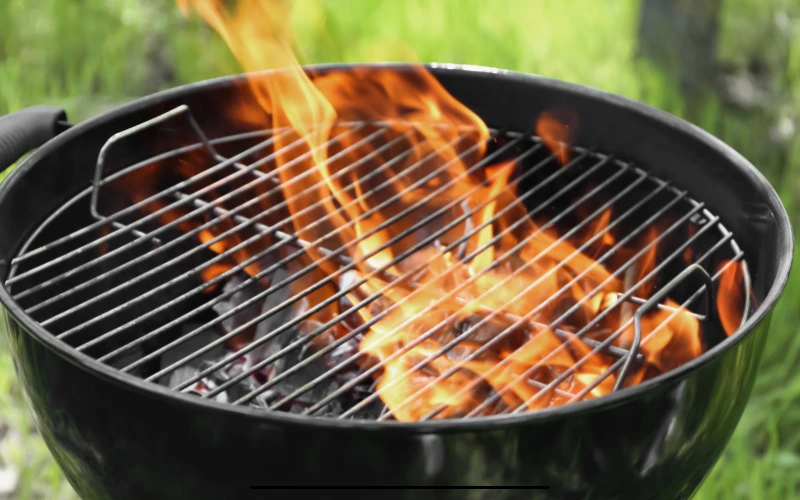

There is a photograph from the early 1950s that could have been taken in any American suburb. A man in a short-sleeved shirt stands over a metal box on four spindly legs, squinting through smoke, holding tongs like a weapon. The fire has gone sideways in the wind. Something that was supposed to be a hamburger is now a memory. He is doing his best. That was the state of backyard cooking before George Stephen changed it.
And it’s worth remembering, in the week we set aside to honor fathers, just how recently that ritual (Dad at the grill, spatula in hand, smoke curling into a summer sky) actually began.
Table of Contents
Before the Grill, There Was the Brazier
Before the 1950s, the standard American backyard cooking setup was an open brazier. Picture a shallow metal box, four legs, no lid, no vent, no way to manage heat. Wind blew the fire sideways. Rain killed it outright. Fat dripped onto coals and sent up flares that blackened everything in reach. It was less cooking and more managing a small, slow disaster. Neighbors in the same era were eating indoors, and honestly, you couldn’t blame them.
The postwar housing boom had given millions of American families something they’d never had in urban apartments: a yard. But a yard with a brazier was not the same as a yard with a grill. Not yet.
The Man Who Put a Lid on It

George Stephen was a welder and part-owner at Weber Brothers Metal Works in Palatine (later associated with Mount Prospect), Illinois, and a father of a large family. He spent time around metal every day. He also spent time feeding a large family, which gave him a particular interest in not ruining dinner over an open flame.
What Stephen developed, and here’s the part that still seems almost too simple, was a covered kettle grill. A dome lid. Adjustable air vents. A way to trap heat, control temperature, and actually manage what was happening to the food underneath. The covered kettle grill, which Stephen developed around 1952, did something the open brazier could never do: it turned backyard cooking from a gamble into a craft.
The Grill Gave Fathers a Domain
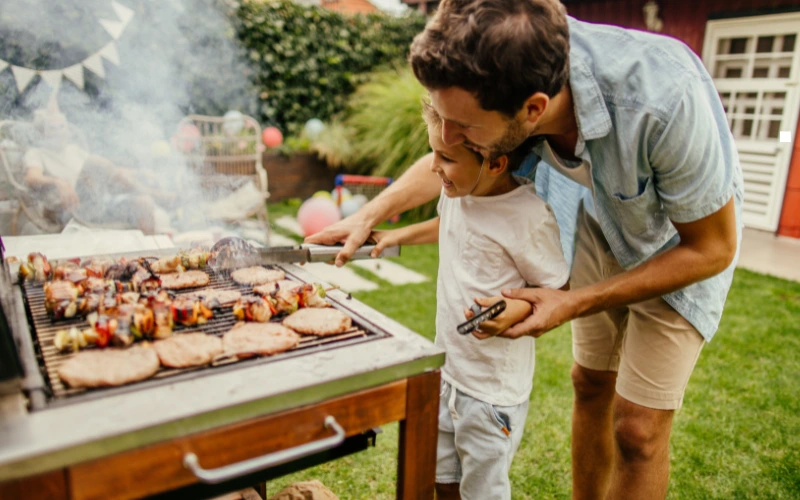
And that distinction mattered enormously to the men who stood over them. The grill gave fathers a domain. Not a kitchen, which historically belonged to mothers and grandmothers, but something outdoors and slightly theatrical, open flame, smoke, tools that looked vaguely serious. A man could invite the neighbors over, set himself up behind the kettle, and be the one who made Sunday afternoon happen. The covered grill didn’t just cook food better. It created a performance worth watching.
By the early 1960s, newspaper coverage was describing the postwar cookout boom in enthusiastic terms. One period article captured the mood with the phrase “blue sky cooking has hit a sizzling new high.” That phrase has a period-specific cheerfulness to it that’s hard to fake. People were genuinely delighted by this. Backyards across the country smelled of charcoal every weekend from May through September, and Dad was the reason why.
The Dishes That Came Back

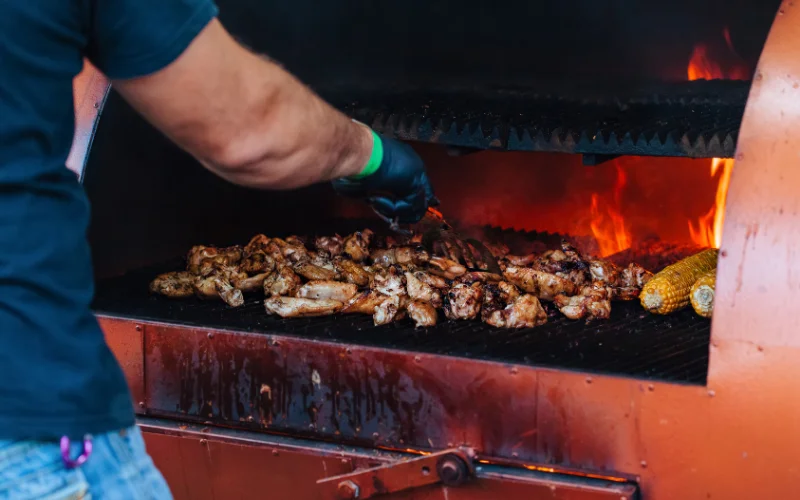
The dishes that fathers grilled in those decades have a specific texture in memory. Beer can chicken, a whole bird propped upright over a half-full can, steam-roasted from the inside out, was the kind of thing that required explanation to dinner guests and produced a certain quiet pride when it worked. Marinated flank steak showed up at better occasions. And slow-smoked ribs, which required tending the fire for hours, were the weekend project that separated the serious grillmen from the casual ones.
These weren’t recipes from cookbooks, mostly. They passed from father to son, neighbor to neighbor, with slight variations that each family treated as proprietary. Your uncle’s marinade was different from your dad’s, and both of them would tell you theirs was better.
What’s interesting, and worth pausing on, is that all three of those dishes are back. People aren’t just cooking them for Father’s Day. They’re cooking them because the act of cooking them connects something. A specific smell, a specific sound, a specific memory of standing next to someone older and watching how it was done.
What the Ritual Was Really About
A covered kettle grill is a tool. That much is obvious. But the ritual that grew up around it in postwar America was about something harder to name. Fathers of the 1950s and 1960s were, many of them, men who had come back from wartime and found themselves in a world that asked them to be quieter and more domestic than anything they’d known. The backyard grill gave them a space that was theirs in a way the living room and the kitchen weren’t. It was slightly risky, slightly technical, slightly public. You could be good at it in ways people noticed.
And on Father’s Day, which had only been recognized as a national holiday in 1972, the grill was where a family gathered around the one person whose job was to feed everyone, outdoors, with fire.
It Started in a Backyard in Illinois
History.com (A&E Television Networks) published a feature in June 2026 tracing exactly this arc, from the open brazier to the covered kettle, from a postwar novelty to an American institution. What the piece makes clear is that the ritual we associate with Father’s Day didn’t arrive fully formed. Someone built the tool that made it possible. Someone else picked it up and made it a habit. And millions of families, summer after summer, turned it into something that felt like it had always been there.
It hadn’t. It started in a backyard in Illinois, with a man who had twelve children to feed and an idea about a dome lid. How strange it is, to think about that now.
Sources
- History.com (A&E Television Networks). How the Backyard Grill Has Evolved Over the Decades, source for the brazier-to-kettle arc and the 1952 invention of the covered grill
- Weber. The Evolution of the Charcoal Grill, source for George Stephen’s kettle grill design and its origins at Weber Brothers Metal Works
This article was created with AI assistance and reviewed for clarity and accuracy.