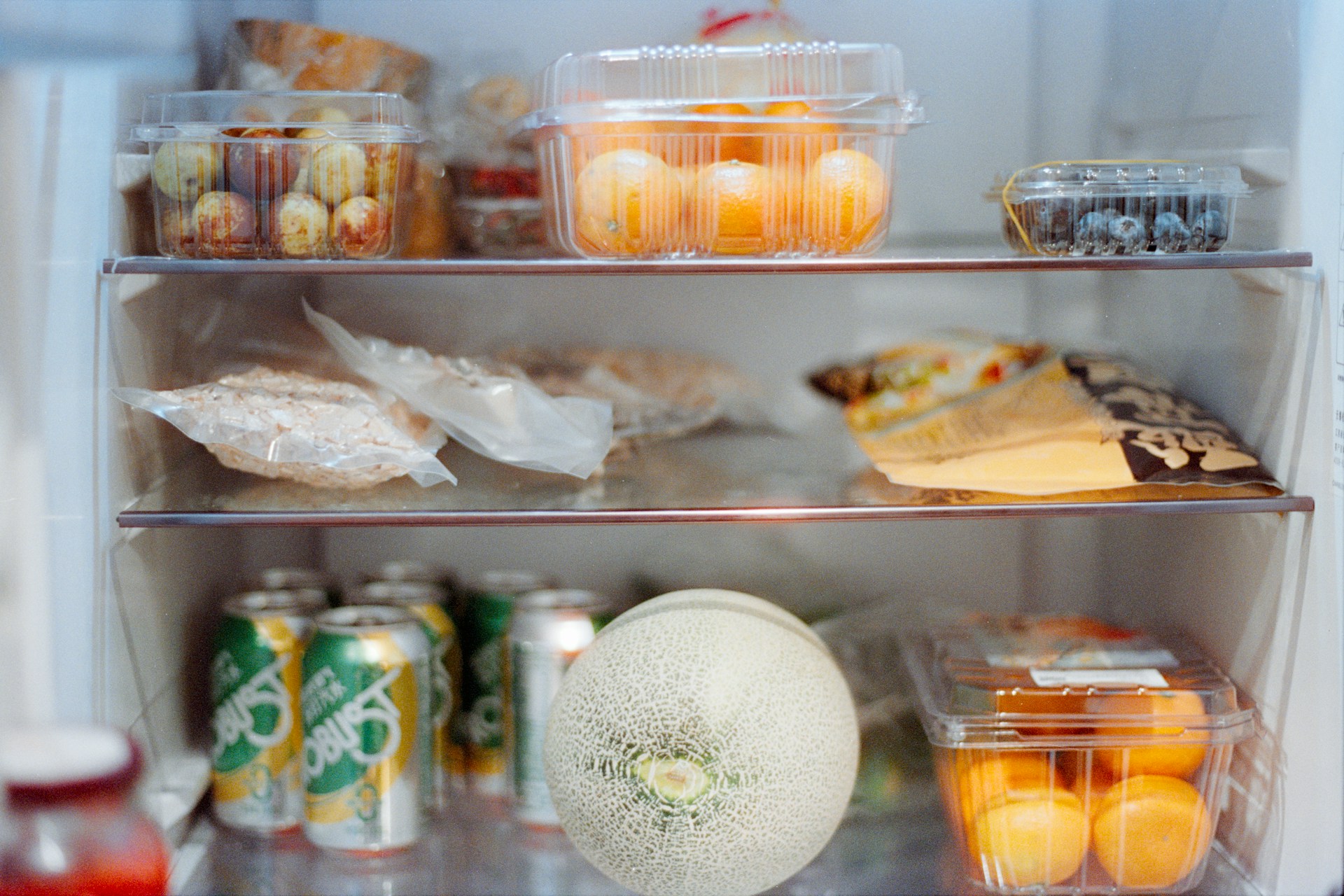

Cold ruins tomatoes. Not slowly, not subtly quickly and almost completely. At temperatures below 50°F, the enzymes responsible for a tomato’s flavor compounds essentially shut down, and the texture turns mealy. Most home refrigerators run between 35°F and 38°F. That’s cold enough to stop a tomato’s ripening chemistry in its tracks and leave you with something that looks fine and tastes like damp cardboard.
That’s the refrigerator’s dirty secret. It’s one of the most useful tools in the kitchen, and also one of the most misused. Americans were sold on refrigerating nearly everything starting in the postwar years, when electric refrigerators became household standard.
The instinct made sense: cold slows spoilage. But “cold slows spoilage” isn’t a universal rule. For a surprising number of everyday foods, refrigeration either accelerates degradation, kills flavor, or changes texture in ways that can’t be reversed. Here’s what actually belongs on your counter.
Table of Contents
Tomatoes
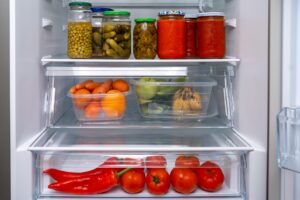

The flavor problem is real and well-documented. Tomatoes are climacteric fruits, meaning they continue to ripen after harvest, and that process depends on enzyme activity that cold temperatures suppress. Once a tomato goes below 50°F, volatile compounds responsible for its characteristic aroma don’t recover even when the tomato warms back up. Store them stem-side down at room temperature, away from direct sunlight.
Use them within a few days of peak ripeness. A ripe tomato on the counter will outlast and outperform a refrigerated one in every sensory category.
Potatoes
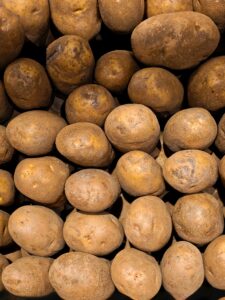
Here’s the strange part: refrigerating raw potatoes doesn’t just change texture, it changes chemistry. At low temperatures, the starches in potatoes convert to sugars through a process called cold-induced sweetening. That sounds harmless, but those extra sugars matter.
When the potato is then cooked at high heat, the sugars react with amino acids through the Maillard reaction and produce higher levels of acrylamide, a compound that’s been flagged by food safety researchers. Beyond the chemistry, refrigerated potatoes also go gummy when cooked. Store them in a cool, dark, ventilated space, a paper bag in a pantry or a root cellar if you have one. Never in plastic, which traps moisture.
Onions
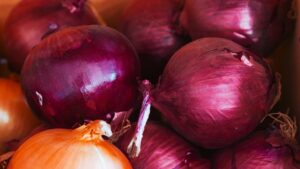
Whole, uncut onions need airflow. In a refrigerator, the humidity softens their outer layers and accelerates mold. The cold also causes them to transfer their odor to anything stored nearby, your butter, your eggs, your leftover pasta. Keep whole onions in a mesh bag or open basket in a cool, dry spot with good air circulation. Once cut, they belong in the refrigerator in a sealed container. The rule is simple: whole stays out, cut goes in.
Garlic
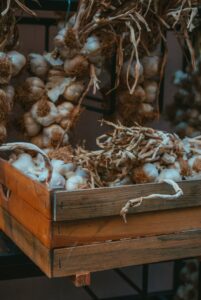
Same principle. A whole head of garlic stores best at room temperature with airflow, away from direct light. In the refrigerator, garlic tends to sprout faster and can develop mold inside the papery skin before you notice anything on the outside. A ceramic garlic keeper or a simple mesh bag on the counter works. Once peeled or minced, refrigerate it, but expect it to lose pungency within a few days regardless.
Bread
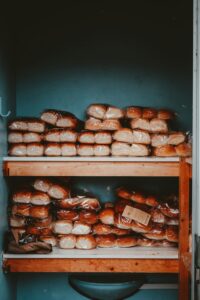
The refrigerator is a bread killer. This one surprises people, because cold feels like preservation. But bread stales faster in the fridge than on the counter. The culprit is starch retrogradation. It’s the same process that happens at room temperature, just faster. Refrigerator temps land right in the range where starch crystals reorganize most quickly, pulling moisture out of the crumb.
You get dry, dense bread within a day or two. A bread box or a paper bag on the counter beats the fridge every time for short stays. And if you need longer storage, go straight to the freezer. Freezing stops retrogradation almost entirely, and a frozen slice toasts back to something close to fresh.
Honey
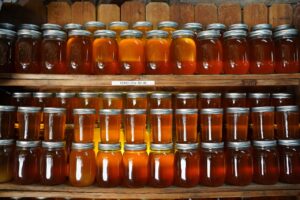
Honey is one of the few foods with essentially indefinite shelf life at room temperature. Its low moisture content and natural acidity create an environment where bacteria and mold cannot grow.
Refrigerating it does nothing to extend its life and does a great deal to ruin its usability, cold honey crystallizes rapidly into a thick, near-solid mass that won’t pour, won’t drizzle, and won’t blend into anything easily. Crystallization is reversible with gentle heat, but it’s unnecessary work for something that didn’t need refrigeration in the first place. Keep honey in a sealed jar at room temperature and it will keep for a very long time.
The Bigger Point
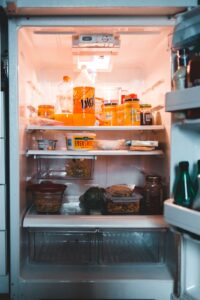
Here’s the thing. The refrigerator became America’s default food storage setting sometime in the early 1950s, when GE and Frigidaire were racing each other into every new suburban kitchen, and the habit calcified fast. Cold equals safe. More cold equals more safe. It doesn’t work that way. Different foods have different storage needs. Some depend on active enzyme chemistry.
Some need dry air. Some are simply stable on their own. Cold disrupts those conditions just as reliably as heat does. Your pantry, your counter, your bread box: they aren’t inferior to the refrigerator. For the right foods, they’re better. You probably already knew something was off every time you bit into a refrigerated tomato and got nothing. Now you know why.
The tomato sitting in your crisper drawer right now is probably already past saving. But the next one doesn’t have to be.
Sources
Peer-reviewed research on low-temperature enzyme suppression in tomatoes
Research on starch-to-sugar conversion in refrigerated potatoes
This article was created with AI assistance and reviewed for clarity and accuracy.