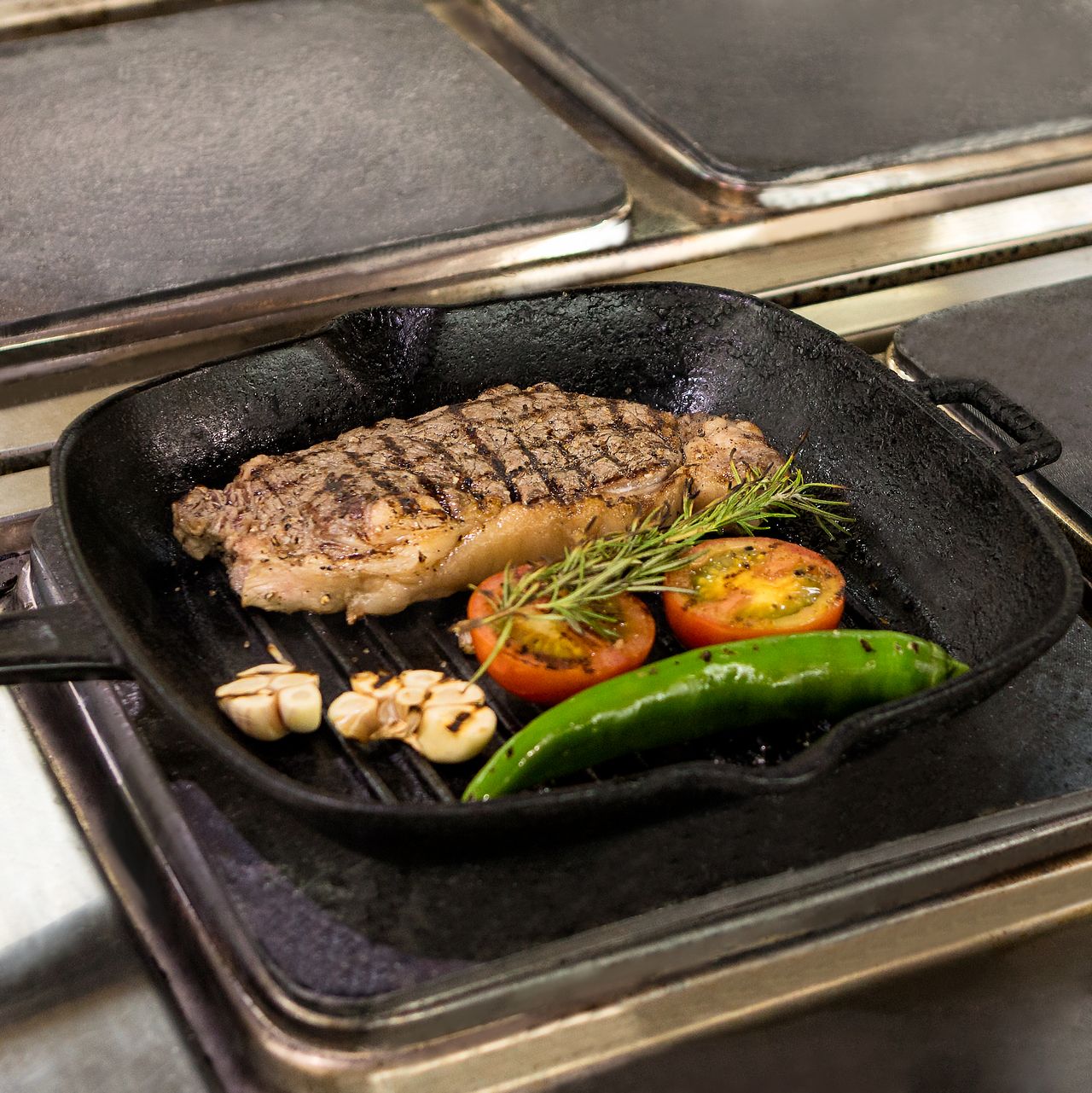

At around 130°F, something starts to happen inside a steak that most recipes mention, but almost none explain. The muscle fibers, which have been squeezing tight from the heat, begin to relax. The moisture that got pushed toward the center of the cut during cooking starts redistributing.
And the difference between a steak that floods the plate when you cut it and one that stays juicy all the way through comes down almost entirely to whether you waited.
Most home cooks know they’re supposed to rest meat. Fewer know why. And almost nobody rests it long enough.
Table of Contents
What Heat Does to Muscle Fibers
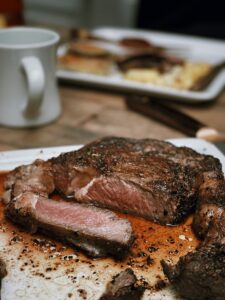

Meat is mostly muscle. Muscle is mostly protein fibers wrapped around pockets of water and fat. When you apply heat,t whether from a cast iron pan, a grill, or an oven, those protein fibers begin to contract. This is the same mechanism that makes a rubber band shrink when you hold it near a flame. The fibers tighten, and as they do, they squeeze the moisture they were holding toward the center of the cut.
By the time a steak hits 125°F to 130°F at the center, the outer crust has already spent several minutes at 300°F or hotter. Those exterior fibers are wound tight. The interior ones are not. Cut in right now, and you’ve opened a pressure valve. The liquid doesn’t redistribute. It just leaves. It pools on your cutting board while the steak turns gray on the plate, and you stand there wondering what went wrong. The resting period gives the fibers time to decompress.
The Redistribution, Not the Reabsorption
Here’s where the science gets specific, and where a lot of cooking explanations get it slightly wrong.
The older explanation, still repeated on packaging and cooking shows, is that resting “lets the juices reabsorb.” That framing implies the liquid soaks back into the fiber like a sponge. What actually happens is closer to equalization of pressure. As the outer fibers cool slightly and relax their grip, the pressure gradient across the cut diminishes. The liquid that was forced inward redistributes more evenly throughout the meat rather than rushing out the moment you create an opening with your knife.
The difference matters because it changes what you do next. You’re not waiting for reabsorption. That takes a long time. You’re waiting for pressure equilibrium, which happens fast. A one-inch ribeye needs five to seven minutes. A thick roast needs fifteen to twenty. The thickness of the cut is the variable, not the total cook time.
The Carryover Cook Nobody Talks About
Resting does something else that often gets overlooked in the juiciness conversation: it finishes the cook.
When you pull a steak off the heat, the outside of the meat is significantly hotter than the center. Heat moves from hot to cool. So even with no external heat source, the outer layers keep pushing warmth toward the middle during the rest. This is called carryover cooking, and it’s why every good recipe tells you to pull your steak off the heat three to five degrees before your target temperature.
For a medium-rare steak (target: 130°F to 135°F), pull it at 125°F to 127°F. The carryover will handle the rest. Skip this adjustment, and the steak you intended to serve medium-rare arrives at medium by the time it reaches the table. Not a disaster. But not what you planned.
A thick roast, with more thermal mass, carries over more aggressively, sometimes as much as ten degrees. The thicker the cut, the earlier you pull it.
Temperature, Surface, and the Tent Question
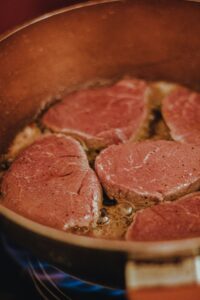
The practical question that actually divides home cooks: do you tent the resting meat with foil, or leave it uncovered?
Both approaches have real trade-offs. Tenting with foil traps steam and keeps the surface warmer, which helps if you’re serving the meat more than ten minutes after it comes off the heat. But that trapped steam also softens the crust, and if you spent five minutes building a Maillard crust in a screaming-hot cast iron pan, softening it with foil is a real loss.
For a thick steak you’re serving immediately, uncovered rest on a wire rack (not a flat plate, which holds heat under the meat unevenly) gives you the best of both: fiber relaxation and a crust that stays crisp. For a large roast heading to the table after carving, a loose foil tent for the first ten minutes is reasonable.
The wire rack detail is small. It matters more than most people expect.
How Long Is Long Enough
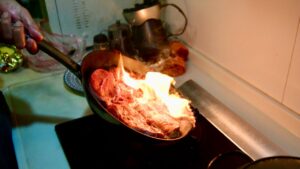
Rest the meat for roughly half the total active cook time. Up to twenty minutes for most home portions. A steak that cooked for ten minutes rests for five. A chicken breast that cooked for twelve minutes rests for six. Simple.
Here’s the thing. That rule breaks down at the extremes. A large bone-in prime rib may need thirty minutes or more. A thin pork chop cooked to 145°F has maybe three minutes of useful resting time before it’s just cold food on a board. And if you’re resting a thin cut on a cold plate in a drafty kitchen, you’ve already lost the game before the timer starts.
The single most common mistake isn’t skipping rest entirely. It’s resting a steak on a cold plate and checking the temperature every ninety seconds. The anxiety defeats the purpose. Set a timer, walk away, and trust the physics.
The Pasta Water Parallel
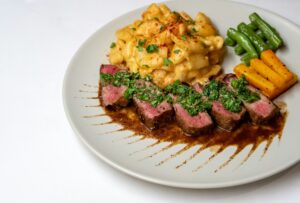
There’s a broader principle at work here that applies across the kitchen: the final two minutes of cooking, or, in this case, the five minutes after cooking, do more work than most recipes acknowledge. Pasta water carries enough starch to bind sauce to noodles in a way no amount of cream or butter can replicate. A resting period carries enough thermal momentum to finish a cook and redistribute moisture in ways a hot pan simply cannot.
In both cases, the mechanism is invisible, which is probably why both steps get skipped. You can’t see the juices redistributing. You can’t see the starch activating. You only see the result when it’s already done, for better or worse.
And the result of skipping rest is always the same: a pool of pink liquid on the cutting board that used to be inside the steak.
Five minutes. That’s the whole argument.
Sources
Background on the browning reaction referenced in the crust section
Primary reference for the carryover cook mechanism and temperature behavior
Background on protein fiber behavior under heat
This article was created with AI assistance and reviewed for clarity and accuracy.