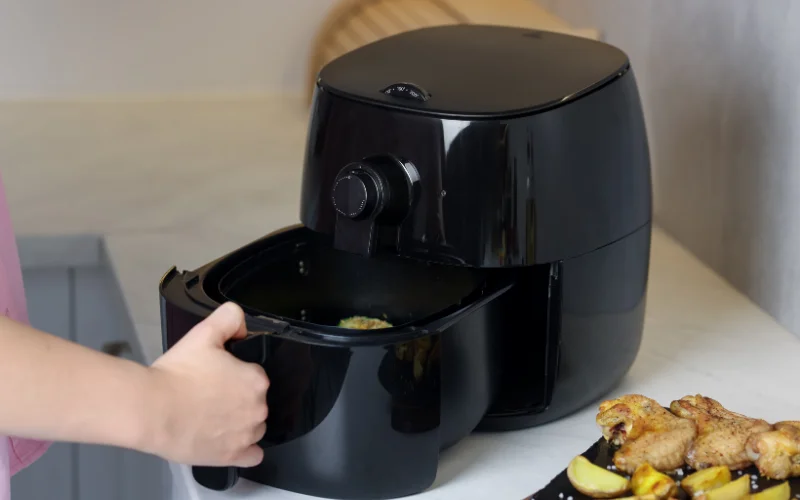

At 400°F, a bone-in chicken thigh develops a crackling skin in 22 minutes that a conventional oven takes 45 minutes to approach. That single temperature-and-time fact explains more about the air fryer’s staying power than any market report could.
And yet the market reports are worth reading. According to industry market research data cited in recent analysis, the global air fryer market is projected to reach approximately $1.3 billion in 2026, up from an estimated $1.2 to $1.3 billion in 2025, with a compound annual growth rate in the mid-single digits projected through 2031, when the market is expected to reach approximately $1.6 to $1.7 billion. That’s not a gadget’s trajectory. That’s infrastructure.
The appliance has moved from birthday-gift novelty to daily-use necessity in most households that own one. Consumers searching for terms like “healthy cooking appliances” and “energy-efficient cooking devices” consistently surface the air fryer as their answer. Amazon Prime Day 2026 is already generating pre-event coverage built almost entirely around air fryer deals, with leading Ninja air fryer models and its mid-size capacity positioned as the weeknight workhorse of choice.
But the machine isn’t the story. The method is.
Table of Contents
The Formula That Changes Everything
Most air fryer recipes fail for the same reason cookbooks fail: they give you a dish, not a system. A recipe for lemon-herb chicken is useful once. A formula you can apply to any protein, any vegetable, any carb, across seven different flavor profiles, is useful every night for the rest of your life.

The formula is this: one protein, one vegetable, one starch, all cooked in sequence in the same basket in under 35 minutes. The protein goes in first at high heat. The vegetable joins partway through, timed so it finishes with color but not char. The starch, pre-cooked grains, par-boiled potatoes, canned chickpeas crisped up, takes either a short blast at the end or a separate 8-minute run while the protein rests. The basket is the same. The logic is the same. The flavor matrix rotates.
Here’s the strange part: once you internalize this sequence, you stop reading recipes. You start reading ingredients.
Seven Flavor Matrices, Seven Nights

Night One: Italian
Night one is the easiest entry point. Italian herbs. Chicken thighs at 380°F for 22 minutes. Zucchini coins added at the 14-minute mark, tossed in olive oil and garlic. Canned white beans, drained and rinsed, crisped in the basket for 8 minutes after the chicken rests. That’s the Italian matrix. Every component fits the flavor logic. Nothing competes.
Night Two: Korean-Adjacent
Night two shifts to Korean-adjacent flavors without requiring a specialty grocery run. Gochujang, available in the Asian foods aisle of most major grocery chains, blended with a little sesame oil and honey becomes the marinade for salmon fillets. The salmon cooks at 390°F for 10 to 12 minutes. Broccolini goes in at the 6-minute mark. Cooked rice, shaped into loose cakes, crisps alongside the fish for the last 5 minutes. The whole thing tastes like it took planning. It didn’t.
Night Three: Mexican
Night three: Mexican. Cumin-rubbed pork tenderloin, sliced thin before cooking so it finishes fast. Bell peppers and red onion in the basket from the start, since they can take the heat. Corn tortillas, wrapped in foil and warmed in the basket’s residual heat, or crisped flat and broken into rough tostada rounds. A lime over everything at the end.
Night Four: Mediterranean
Night four: Mediterranean. Lamb meatballs, formed small so they cook through at 375°F in about 12 minutes. Eggplant cubes tossed in olive oil, added at the 5-minute mark. Chickpeas from a can, already cooked, already seasoned with cumin and smoked paprika, crisped separately for 8 minutes. Feta crumbled over the top after plating.
Night Five: Japanese
Night five goes Japanese in spirit without demanding technical skill. Miso-glazed cod or any mild white fish. Snap peas and shredded cabbage in the last 4 minutes of the fish’s cook time. Rice cakes or plain rice, portioned and crisped. A drizzle of rice vinegar and sesame seeds at the plate.
Night Six: French Bistro
Night six leans French bistro. Dijon-crusted salmon or chicken cutlets, coated in breadcrumbs that turn genuinely golden at 400°F in 15 minutes. Haricots verts, or regular green beans if that’s what’s in the refrigerator, tossed in butter and shallot, added at the 10-minute mark. Small potatoes, halved, par-boiled for 8 minutes before going into the basket for a final crisp-up.
Night Seven: The Wildcard
Night seven is the wildcard. Whatever is left in the refrigerator gets sorted into protein, vegetable, and starch piles and run through whichever flavor matrix fits. Tuesday’s leftover cooked sausage plus Wednesday’s unused kale plus a can of cannellini beans becomes a loosely Italian situation. Sunday is the night the formula proves it isn’t a recipe. It’s a framework.
The Ninja 5-Quart Sizing Question

One practical note worth making explicit. The Ninja Air Fryer Pro’s 5-quart basket is sized for a family of three to four, but proteins and vegetables need air space to crisp rather than steam. Crowding the basket is the single most common mistake that produces soggy results. For four people, cook protein in two batches, the second batch rests in a warm oven (200°F) while the vegetables and starch finish. The sequence still runs under 40 minutes total.
The Maillard reaction, the chemical browning that creates crust, color, and flavor, requires dry heat and air circulation. That’s what an air fryer does efficiently with little to no oil, using circulated hot air to approximate the conditions of a deep fryer or very hot oven. When the basket is overcrowded, moisture builds. The Maillard reaction stalls. The food steams instead of crisps. The formula still works. The technique just has to account for batch size.
Whether people are buying air fryers because they’re energy-efficient, because their kitchens are small, or because a seven-night formula dinner system genuinely sounds useful, the market data suggests they’re buying them and not putting them in closets. That’s a different story than most kitchen appliances tell.
Sources
- Mordor Intelligence. Air Fryers Market Size, Share & Forecast, source for the global air fryer market valuation, CAGR, and multi-year growth projection
This article was created with AI assistance and reviewed for clarity and accuracy.