
Chicken and Rice Casserole likely comes to mind when you think about a comforting, versatile meal. You can easily customize this dish with your favorite soups, proteins, and seasonings, making it perfect for any occasion. Imagine the tender chicken mingling with fluffy rice and creamy soup, creating a well-balanced meal that satisfies the palate and the soul. But what if you could take this classic dish to new heights with a few simple tweaks? Let’s explore some variations and tips that might change how you approach this beloved casserole.

Table of Contents
Key Takeaways
- Preheat oven to 325°F and layer seasoned chicken and uncooked rice in a greased casserole dish.
- Combine cream of chicken soup with water, pour over the chicken and rice, and bake covered for 1 hour and 15 minutes.
- Experiment with different soups and seasonings for flavor variations.
- Make vegetarian options by substituting chicken with vegetables or plant-based proteins.
- Ensure safe consumption by maintaining a dish temperature of 165°F using a food thermometer.
Ingredients

When making a chicken and rice casserole, you’ll need cooked chicken, rice, cream of chicken soup, and your favorite seasonings. These core ingredients create a hearty and satisfying dish rich in protein and carbohydrates. The chicken provides the protein, while the rice offers the necessary carbs, making this casserole filling and balanced.
The cream of chicken soup is the binding agent, giving the casserole its creamy texture and rich flavor. You can stick with the classic cream of chicken soup but don’t hesitate to experiment with other types, like cream of mushroom, for a different taste.
Seasonings are where you can make this dish your own. Whether you prefer a simple salt and pepper mix or a more complex blend of herbs and spices, the choice is yours. Some people like to add garlic powder, onion powder, or even paprika to give the casserole a bit more depth.
Feel free to customize it further by adding vegetables or different types of cheese. These variations can add texture and flavor, making your casserole unique to your taste preferences.
Preparation Steps
To start, preheat your oven to 325°F. While the oven heats, take a greased casserole dish and layer the bottom with seasoned chicken breasts. This forms the base of your chicken and rice casserole.

Next, evenly spread uncooked rice over the chicken. Sprinkle a packet of onion soup mix on the rice to add flavor.
Mix a can of cream of mushroom soup with water in a separate bowl until well combined. Pour this mixture over the chicken and rice, ensuring everything is evenly coated. As it bakes, this mixture will soak into the rice and chicken, creating a creamy and delicious casserole.
Once everything is assembled, cover the casserole dish tightly with aluminum foil. This will help trap the steam and cook the rice thoroughly. Place the dish in the oven and bake for about 1 hour and 15 minutes.
Check the casserole after baking to make sure the rice is tender. If it isn’t quite done, cover it again and bake for 10-15 minutes.
Serve your chicken and rice casserole hot, and enjoy the comforting flavors of this homemade dish.
Recipe Variations
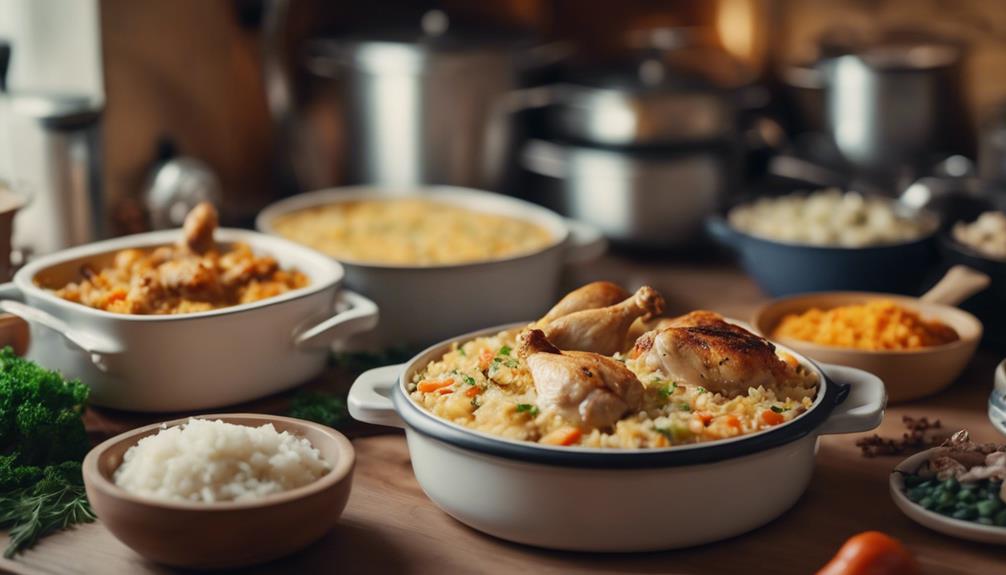
You can easily adapt your chicken and rice casserole to suit different dietary needs.
For a vegetarian option, replace the chicken with hearty vegetables like mushrooms or zucchini.
If you need a gluten-free version, use gluten-free canned soups and make sure your rice is certified gluten-free.
Vegetarian Recipe Options
Transform your chicken and rice casserole into a delicious vegetarian dish by substituting chicken with hearty plant-based proteins like tofu, tempeh, or seitan. These vegetarian options mimic the texture of chicken and pack a protein punch. Instead of chicken broth, vegetable broth should be used to keep the dish meat-free while adding depth of flavor.
Incorporate a variety of vegetables to boost the nutritional value and enhance the dish’s flavor profile. Think bell peppers, zucchini, carrots, and peas. These colorful vegetables provide essential nutrients and add a delightful crunch and sweetness.
Experiment with different types of vegetarian cream soups, such as cream of mushroom or cream of broccoli, to achieve the creamy texture you love in casseroles.
Top your casserole with breadcrumbs mixed with herbs and olive oil for a crunchy and flavorful twist. This will give your dish a satisfying crispy layer that contrasts nicely with the creamy interior.
Gluten-Free Modifications
For a gluten-free twist on your chicken and rice casserole, swap out regular cream soups for gluten-free versions like cream of chicken, celery, or mushroom. These gluten-free cream of soups will guarantee your dish is safe for those with gluten sensitivities.
Next, replace regular white rice with gluten-free instant white rice or cooked brown rice. Both options will help you maintain the gluten-free integrity of your casserole.
Always check all your ingredients’ labels, including seasonings, to verify they’re gluten-free. This step is essential because many seasonings and additives can contain hidden gluten.
Using a gluten-free rotisserie chicken or cooking your chicken at home with gluten-free seasonings will ensure your casserole remains gluten-free.
Be mindful of cross-contamination—thoroughly clean all kitchen utensils, cookware, and surfaces before cooking. This prevents any gluten-containing ingredients from accidentally contaminating your dish.
Storage Instructions
Store leftovers in an airtight container in the fridge for up to four days to keep your chicken and rice casserole fresh.
When reheating, add a few drops of water to maintain moisture and ensure the dish reaches at least 165 degrees F.
If you plan to freeze it, follow proper thawing techniques for the best flavor.
Proper Refrigeration Techniques
To keep your chicken and rice casserole leftovers fresh, store them in an airtight container in the fridge for up to four days.
When it’s time to reheat leftovers, follow some important steps to guarantee safe consumption, begin by adding a few drops of water to the casserole before reheating; this helps keep the rice moist and prevents drying.
For the best results, you can reheat the casserole in either the oven or the microwave. If you choose the oven, preheat it to 350 degrees F, cover the casserole with aluminum foil, and heat it until it’s piping hot throughout.
Alternatively, if you’re using the microwave, place the casserole in a microwave-safe dish, cover it with a microwave-safe lid or wrap, and heat on high, stirring occasionally to ensure even heating.
Always use a food thermometer to check the internal temperature of the reheated casserole. To be safe for consumption, it must reach at least 165 degrees F.
Freezing and Thawing Tips
Freezing your unbaked chicken and rice casserole in an aluminum pan guarantees a convenient meal for up to three months. To freeze your casserole, wrap it tightly with aluminum foil and seal it well to prevent freezer burn. Label the pan with the date so you’ll know how long it’s been stored.
When you’re ready to enjoy your casserole, thaw it overnight in the refrigerator. This slow thawing process ensures that the texture and flavors remain intact. Avoid thawing it at room temperature to minimize the risk of bacterial growth. Once melted, preheat your oven and prepare to bake the casserole.
Before you reheat, add a few drops of water to the casserole. This step helps keep the rice moist during baking. Place the thawed casserole in the oven and bake until it’s piping hot and the rice is fully cooked. This ensures that the dish is both delicious and safe to eat.
If you have any leftovers, store them in an airtight container in the fridge for up to four days. Reheat thoroughly before serving to enjoy the best flavor and texture.
Reheating for Best Flavor
When reheating your chicken and rice casserole, you want to ensure that it tastes just as delicious as when it was freshly made. Start by storing your leftovers in an airtight container in the fridge. They’ll stay fresh for up to four days.
To ensure safe consumption, it’s important to reheat the dish, especially since it contains rice thoroughly. Before reheating, begin by adding a few drops of water to the casserole. This step is vital to keeping the rice moist and preventing it from drying out.
You can reheat the dish in either the oven or the microwave. Whichever method you choose, ensure the internal temperature reaches at least 165 degrees F. A food thermometer is the best way to check this and guarantees that the dish is heated properly.
Preheat 350 degrees F for oven reheating, and cover the casserole with aluminum foil to retain moisture. In the microwave, use a microwave-safe dish and cover it with a microwave-safe lid or wrap.
These steps will help you enjoy your chicken and rice casserole with the best flavor and safe consumption.
Freezing Tips
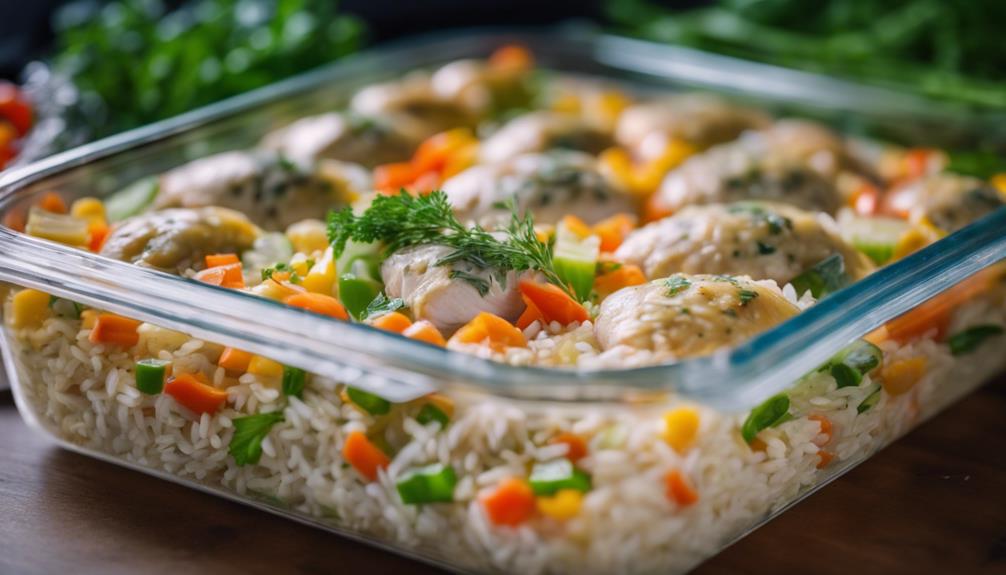
For best results, freeze your unbaked chicken and rice casserole in an aluminum pan for up to three months. This method helps maintain the casserole’s texture and flavor. Before you freeze, ensure the casserole is tightly covered with aluminum foil or plastic wrap to prevent freezer burn.
Please plan to thaw your casserole when you’re ready to enjoy it. Place the frozen casserole in the fridge overnight. This important thawing process ensures even defrosting, vital for a consistent bake. Once melted, preheat your oven and prepare to bake.
Before baking, add a few drops of water to the casserole. This simple step helps keep the rice moist and prevents it from drying out during reheating. Pop the casserole in the oven and bake until it’s piping hot. Use a food thermometer to ensure it reaches at least 165 degrees F for safe consumption.
Serving Suggestions
Once your chicken and rice casserole is perfectly baked, pair it with steamed vegetables or a fresh garden salad for a balanced and colorful meal. Steamed broccoli, carrots, or green beans provide nutrition and enhance your plate’s visual appeal.
A fresh garden salad with a light vinaigrette or a creamy coleslaw complements the richness of the cheesy chicken, creating a harmonious blend of flavors.
For those who love bread, warm dinner rolls, garlic bread, or crusty French bread make excellent side dishes. These options are perfect for soaking up any extra creamy sauce left on your plate.
If you’re looking for a more filling meal, try serving the casserole with mashed potatoes, sweet potato mash, or buttered noodles. These hearty sides will ensure that everyone leaves the table satisfied.
To add a final touch of color and freshness, garnish your casserole with chopped parsley, green onions, or a sprinkle of paprika before serving. These simple additions elevate the dish’s appearance and add a burst of flavor that complements the cheesy chicken.
Enjoy your meal!
Conclusion
You now have a foolproof guide to making a delicious Chicken and Rice Casserole. Whether you stick to the classic recipe or try some variations, you will surely create a hearty meal that everyone will love.
Don’t forget to store leftovers properly or freeze portions for easy meals later.
Serve it with a side salad or steamed veggies, and you have a satisfying dinner.
Enjoy your cooking adventure!
FAQs
1. Can You Cook Raw Chicken and Rice at the Same Time?
Yes, you can cook raw chicken and rice at the same time. Guarantee the cooking temperature reaches 165°F. Experiment with seasoning choices and broth options for added flavor. Monitor closely to prevent overcooking or undercooking.
2. Can You Make Chicken and Rice Casserole Without Cream of Chicken Soup?
Yes, you can make it without cream of chicken soup. Use alternative ingredients like a roux-based sauce, chicken broth, and mayonnaise. For dairy-free, try coconut milk and spices. These options are healthier and flavorful.
3. Why Does Anna Always Make Chicken Casserole?
Anna always makes it because it’s a childhood favorite and a weekly staple. You’ll love how it’s become a tradition in her home, offering comfort and convenience while satisfying everyone, even the picky eaters.
4. What Are the Four Components of a Casserole?
To make a casserole, you’ll need four components: protein choices like chicken or beef, starch, binder, and seasonings. Don’t forget cooking vessels and topping options like breadcrumbs or cheese for added texture and flavor.