
Table of Contents
The $4 Gap at the Meat Counter
Ground beef has crossed $6 a pound in many markets at the meat counter this spring. Chicken thighs, sitting two shelves down, have typically averaged well under $3 a pound. That gap, roughly $4 a pound, is not a sale. It’s a structural shift, and the USDA Economic Research Service says it isn’t going away.
For a family cooking protein three nights a week, switching from ground beef to chicken thighs saves somewhere north of $1,000 a year. Which sounds dramatic until you do the math on a Tuesday night.
Herds Don’t Rebuild Overnight
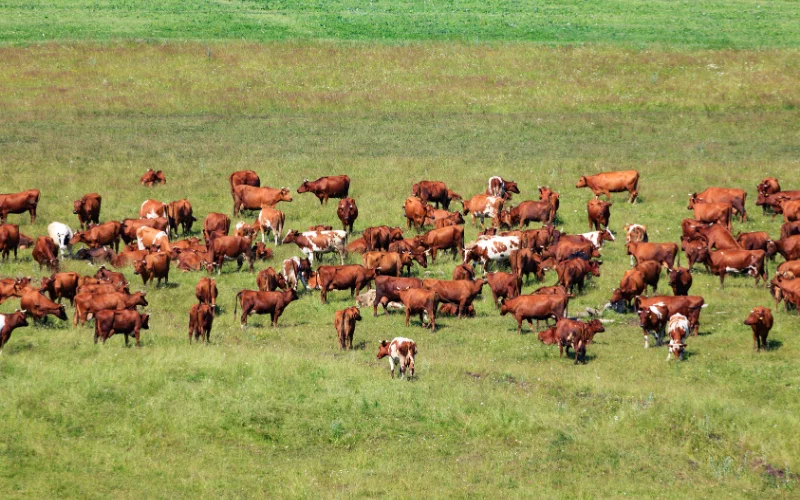
Beef cow slaughter has run significantly below year-over-year levels in recent months, according to USDA data. Industry analysts and agricultural economists have broadly noted that rebuilding beef herds is a multi-year process, not a matter of months. Herds don’t rebuild overnight. A cow that’s sold can’t be un-sold, and rebuilding a beef herd requires years of intentional breeding decisions that most ranchers haven’t made yet, because the economics haven’t quite told them to.
USDA ERS outlooks have projected tightening per-capita beef availability alongside relatively stable or growing poultry supply. Chicken production scaled up; beef production didn’t. That asymmetry is what you’re seeing at the meat counter, and according to Food Drink Life’s June 2026 roundup, syndicated across dozens of local news outlets, chicken thighs have quietly become the definitive budget weeknight protein of the moment.

Why the Thigh Outcooks the Breast
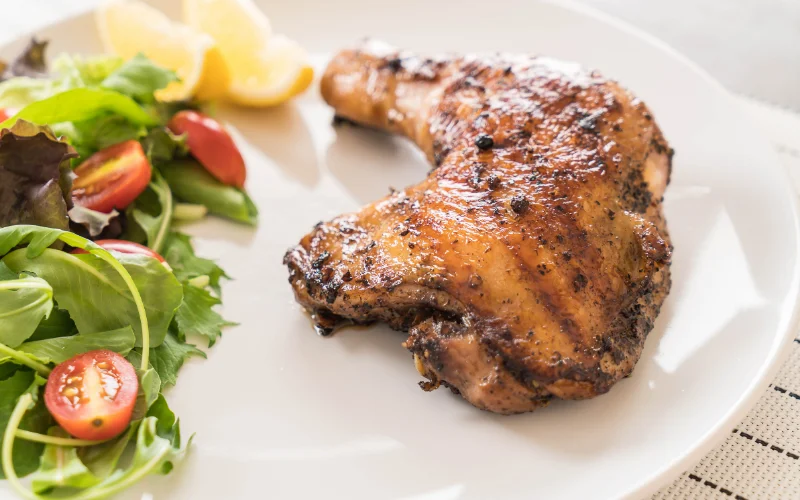
This is where the cook comes in, not just the accountant. Chicken breast gets the marketing. Chicken thigh gets the results. The difference is fat content and muscle structure. Thighs come from a working muscle group, the leg, which means more intramuscular fat and connective tissue. That fat renders during cooking. The connective tissue softens.
Where a breast will turn cottony and dry if it sits 3 minutes too long at temperature, a thigh has a margin of error built into its biology. You can pull a thigh off the grill at 175°F and it will still be juicy. Pull a breast to the same temperature and you’re eating sawdust. For the 30-minute weeknight window, that forgiveness is the whole game.
Three Ways to Cook It on a Weeknight
Total active time under 30 minutes. Cost per serving well under a dollar. Chicken thighs tolerate heat methods that destroy breast meat. High-heat sheet pan roasting. Braises that run 45 minutes. Marinades with acid that would turn a breast to mush in two hours. All of these work on a thigh because the fat acts as a buffer, and because dark meat protein structure denatures differently under sustained heat than white meat does.
A sheet pan with thighs, halved baby potatoes, and whatever vegetable is cheapest this week, 425°F, 25 minutes, done. One pan, one rack.
Stovetop in a cast iron skillet: skin side down, medium-high heat, don’t touch them for eight minutes. The skin renders and crisps. Flip, three minutes, finish in the oven at 400°F for ten more. The kind of technique Harold McGee would approve of without fanfare.
Or marinade and grill, which is where the July 4th logic lands. Thighs take a marinade overnight without breaking down. Breasts can’t say the same.
The wry truth is that thighs have always been the better technical choice. The price gap just finally made it impossible to ignore.
For Home Cooks, a Reorientation

Beef prices rising sharply year-over-year is not a blip. The American Farm Bureau‘s position, that shortages will take years to resolve, reflects a supply chain that contracted and can’t spring back quickly. Ranchers who liquidated herds during drought years or high input-cost periods don’t restock overnight. The economics of cattle require a multi-year commitment before a single additional pound of beef reaches a shelf.
Poultry doesn’t work that way. Chicken production cycles are measured in weeks, not years. When demand shifts, supply can follow relatively quickly. That responsiveness is part of why the USDA sees poultry availability rising even as beef drops, the systems aren’t comparable.
For home cooks, this is less a crisis than a reorientation. The ingredient that was undervalued for decades because it was cheap is now cheap for the same reason it was always good: it’s forgiving, flavorful, and faster than most people realize. At $2 to $3 a pound heading into the summer grill season, chicken thighs aren’t a consolation prize. They’re the move.
Sources
- USDA Economic Research Service. Cattle & Beef: Market Outlook, source for tightening beef supply and the structural price shift
- USDA Economic Research Service. Meat Price Spreads, source for retail beef and poultry price comparisons
- American Farm Bureau Federation. Market Intel: Smaller Cattle Herd Creates Market Volatility, source for cattle herd contraction and the multi-year rebuilding timeline
- USDA Economic Research Service. Food Price Outlook: Summary Findings, source for 2026 beef and poultry price projections
This article was created with AI assistance and reviewed for clarity and accuracy.