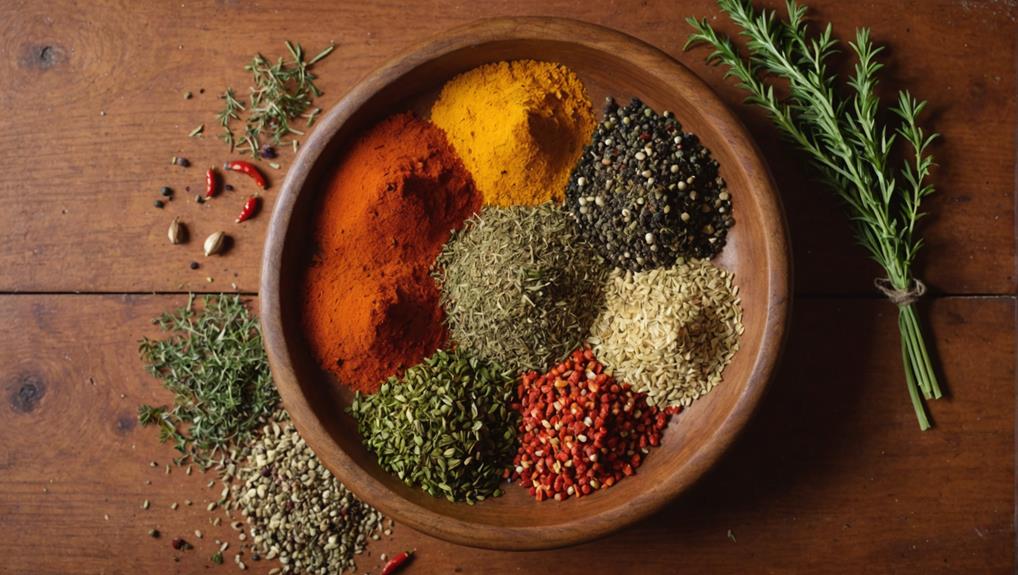
Creole seasoning should be at the top of your list when you consider enhancing your cooking repertoire. This versatile blend of paprika, kosher salt, ground peppers, dried herbs, garlic powder, and onion powder can transform even the simplest dishes into culinary delights. You might be curious how to mix or store your blend effectively to maintain its vibrant flavors. Additionally, exploring the health benefits and diverse applications of Creole seasoning in your recipes could offer surprising insights. Let’s start by examining the key ingredients that make this seasoning unique.

Table of Contents
Key Takeaways
- It typically includes paprika, kosher salt, ground peppers, dried herbs, garlic powder, and onion powder.
- Smoked paprika and dried herbs like thyme and oregano add depth and earthiness to the seasoning.
- Store it in an airtight container in a cool, dark place to maintain freshness.
- Use Creole seasoning as a dry rub for meats or mix it into marinades for added flavor.
- Creole seasoning enhances dishes like gumbo, jambalaya, grilled chicken, and roasted vegetables.
Key Ingredients

The key ingredients are paprika, kosher salt, ground peppers, dried herbs, garlic powder, and onion powder. These components combine to create a flavorful, aromatic blend that’s the backbone of many Creole dishes.
One ingredient that stands out is smoked paprika. It not only adds a rich, smoky depth to the seasoning but also enhances the overall complexity of the flavor profile.
Essential salt is another vital ingredient. Its coarse texture helps to evenly distribute the other spices and herbs throughout the blend, ensuring that each bite is perfectly seasoned. Additionally, the pure, clean taste of kosher salt allows the other ingredients to shine without overwhelming them.
Dried herbs like thyme and oregano are important for adding an earthy, herbal note to the seasoning. These herbs bring complexity that balances the heat from the ground peppers, such as black, white, and cayenne.
Combining these dried herbs with garlic powder and onion powder creates a well-rounded seasoning that enhances the taste of gumbo, jambalaya, and blackened meats. Together, these ingredients form the perfect blend for authentic Creole cuisine.

Making Creole Seasoning
Gather high-quality ingredients like paprika, kosher salt, garlic powder, onion powder, and ground peppers to make your own Creole seasoning. Quality is key for a robust and flavorful blend. Here’s a simple approach to make sure your seasoning stands out:
- Measure Accurately: Use precise measurements for each ingredient to maintain balance. A typical blend might include two tablespoons of paprika, one tablespoon of kosher salt, one tablespoon of garlic powder, one tablespoon of onion powder, and one teaspoon each of black, white, and cayenne peppers.
- Mix Thoroughly: Combine all the ingredients in a bowl and mix well. Ensuring that the spices are evenly distributed is important for a consistent flavor in every pinch.
- Customize to Taste: Feel free to adjust the proportions. If you prefer a smokier flavor, consider adding smoked paprika. For more heat, increase the cayenne pepper.
- Test and Adjust: Before finalizing your blend, make a small test batch and use it in a favorite dish to see if it meets your taste.
Creating your own blend allows you to control the spice levels and tailor it to your culinary needs. Enjoy the depth and zest this blend brings to your dishes!
Storage Tips
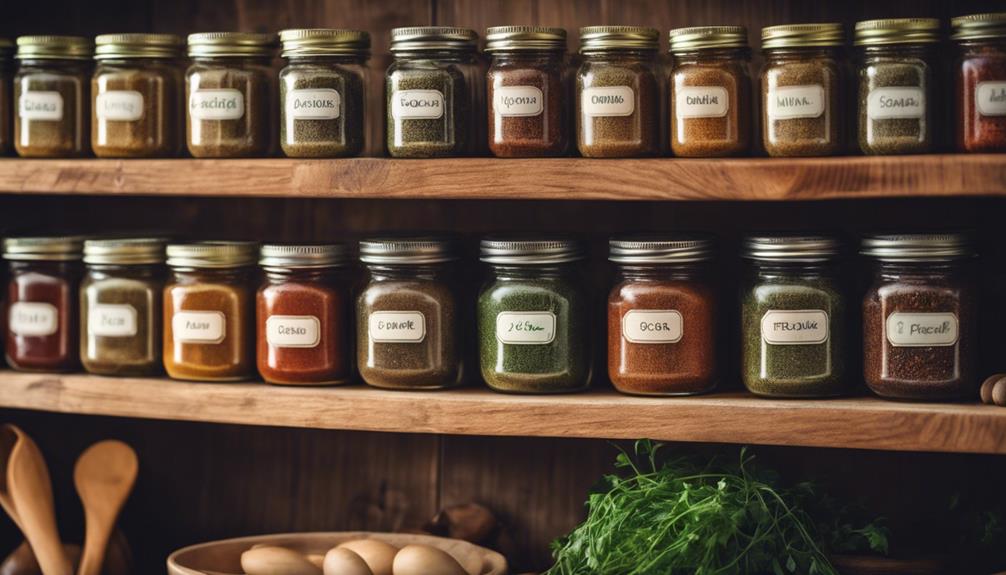
Store your Creole seasoning in an airtight container to keep it fresh and flavorful. Place the container in a cool, dark space away from direct sunlight.
This will help maintain its potency and prevent clumping for up to six months.
Airtight Container Necessity
Preserving the vibrant flavors of Creole seasoning starts with storing it in an airtight container. This safeguards the seasoning from moisture and air, which can degrade its quality over time. This simple step guarantees that your Creole seasoning remains fresh and potent for up to six months, allowing you to enjoy its rich flavors whenever needed.
For best results, consider the following tips:
- Choose the Right Container: Choose an airtight container. Glass jars with rubber seals or high-quality plastic containers with secure lids work best.
- Check the Seal: Before storing it, make sure the container’s seal is intact. A compromised seal won’t provide the necessary protection.
- Label and Date: Always label your container with the date you stored the seasoning. This helps you keep track of its freshness and use it within the ideal time frame.
- Avoid Frequent Opening: Air and moisture can enter the container whenever you open it. Only open it when necessary to maintain the seasoning’s quality.
Ideal Storage Conditions
Maintaining the potency of your Creole seasoning also involves storing it in the right conditions. To guarantee your Creole seasoning blend stays fresh and flavorful, store it in an airtight container. This prevents moisture from getting in and causing clumping or spoilage. Choose a container with a tight seal to keep the seasoning in an airtight environment.
Place the container away from direct sunlight in a cool, dark place like a pantry or cupboard. Exposure to light and heat can degrade the spices, diminishing the robust flavors you’re aiming for. Regularly check the expiration dates on the spices used in the blend to ensure you’re not compromising the quality of the overall seasoning.
If your Creole seasoning blend has clumped together, you can process it in a blender to restore its texture and usability.
Finally, label the container with the date you prepared the seasoning. This will help you track its shelf life and guarantee you’ll use it while it’s still at its best.
Following these storage tips will keep your Creole seasoning blend as vibrant and delicious as the day you made it.
Cooking Tips
One key to elevating your dishes with Creole seasoning is knowing when and how to incorporate it into your cooking. Unlike Cajun seasoning, which is often spicier, Creole seasoning offers a balanced blend of herbs and spices that can enhance various dishes. To make the most of it, distribute the spices thoroughly in your recipes, a hallmark of Creole cooking.
Here are four tips to get the best results:
- Season Early: Add Creole seasoning at the beginning of your cooking process to allow the flavors to meld with your ingredients. This is particularly effective in dishes like gumbo or jambalaya.
- Rub for Meats: Use as a dry rub for meats. Coat your chicken, fish, or beef with Creole seasoning before grilling or roasting. This creates a flavorful crust that seals in the juices.
- Balance Flavors: Be cautious if your dish is already rich in spices. Creole seasoning is potent, so adding too much can overpower other flavors.
- Mix with Marinades: Combine Creole seasoning with oil, vinegar, or citrus juice to create a marinade. This adds depth and complexity to your grilled or baked dishes.
Use these tips to master Creole seasoning and elevate your culinary creations!
Uses in Recipes

Creole seasoning enhances the flavor profiles of dishes like gumbo, jambalaya, and grilled chicken.
Its versatility lets you use it in rice dishes, seafood, soups, and roasted vegetables.
This seasoning can easily be adjusted to suit your taste, whether you want to add depth or a touch of heat.
Enhancing Flavor Profiles
With its unique blend of herbs and spices, Creole seasoning instantly enhances the flavor profiles of dishes like gumbo, jambalaya, and blackened salmon. This Cajun-inspired mix of seasoning blends adds heat and depth, and complexity to various recipes. The rich combination of herbs and spices guarantees that each dish is bursting with flavor.
To truly amplify the flavors in your cooking, consider these tips:
- Sprinkle it on seafood: Use Creole seasoning on shrimp, fish, or scallops to bring out their natural sweetness while adding a savory kick.
- Enhance rice dishes: Creole seasoning can transform plain rice into a flavorful side dish that complements any main course.
- Elevate soups and stews: Adding a spoonful of Creole seasoning to your soups or stews can create a robust and hearty flavor that warms the soul.
- Rub it on meats: Whether you’re grilling chicken, pork, or beef, Creole seasoning can infuse the meats with a smoky, spicy essence.
Experimenting with Creole seasoning in different recipes can help you discover new and exciting flavor combinations.
Versatile Cooking Applications
Incorporating Creole seasoning into your recipes opens a world of versatile cooking applications that can transform ordinary dishes into culinary masterpieces. This seasoning mix, known for its bold flavors and aromatic profile, is perfect for various dishes.
Whether grilling meats, preparing seafood, or roasting vegetables, sprinkling this spice blend can elevate your dish.
Use Creole seasoning as a dry rub for grilling steaks, chicken, or pork. The spices penetrate the meat, creating a mouthwatering crust. Add the seasoning to shrimp or fish for seafood lovers before sautéing or grilling. The bold flavors will bring the taste of Louisiana’s coast right to your kitchen.
This versatile seasoning also benefits vegetables. Toss your favorite veggies in olive oil and Creole seasoning before roasting for an irresistible side dish.
A spoonful of this spice blend brings soups, stews, and rice dishes to life. Add it to your gumbo or jambalaya for an authentic Creole experience.
Health Benefits
Using Creole seasoning, you can enhance your dishes’ flavor while reaping numerous health benefits. This versatile blend often contains black pepper and garlic powder, which offer significant health benefits. Black pepper is known for its antioxidant properties and can help improve digestion. Garlic powder, on the other hand, boasts antibacterial and anti-inflammatory properties, contributing to better immune health.
Here are some of the health benefits you can enjoy with Creole seasoning:
- Antioxidants: The herbs and spices in Creole seasoning are rich in antioxidants, which can help protect your cells from damage caused by free radicals.
- Reduced Sodium Intake: It can decrease the need for added salt in your meals, helping you maintain a healthier sodium level.
- Enhanced Flavor: It encourages healthier eating habits by making vegetables and lean proteins more appealing.
- Immune Support: Ingredients like garlic powder and black pepper support your immune system, reducing the risk of infections and inflammation.
Additional Recipes

Let’s explore some delicious recipes that showcase how you can incorporate them into your meals for a burst of flavor.
One classic dish you can make is Red Beans and Rice. This hearty meal combines red beans, smoked sausage, and rice, all enhanced by the bold and savory kick of Creole seasoning.
Another wonderful recipe is Corn Maque Choux, a traditional Louisiana side dish. To make it, mix fresh corn, bell peppers, onions, and tomatoes, seasoning the ingredients thoroughly with Creole spices for an authentic taste.
For a richer option, try Chicken and Sausage Gumbo. This comforting dish uses a roux, chicken, sausage, and the unmistakable essence of Creole seasoning to create a flavorful stew.
Seafood lovers can’t go wrong with Blackened Salmon Pasta. Season your salmon fillets with Creole seasoning or Old Bay, then serve over creamy pasta for a delicious fusion.
These recipes will introduce you to Louisiana Creole cuisine’s vibrant flavors.
Conclusion
Making your own Creole seasoning can add a personal touch to your meals while boosting flavor and health benefits.
Remember to store it in an airtight container to maintain its freshness.
This versatile blend will never disappoint, whether you’re spicing up gumbo, grilled chicken, or roasted veggies.
So experiment with your favorite recipes, and enjoy the rich, smoky depth that only you can provide.
You’ve got this!
FAQs
1. What Is Creole Seasoning Made Of?
You’re wondering what it’s made of? Creole seasoning’s ingredients include paprika, kosher salt, ground peppers, dried herbs, garlic powder, and onion powder. Its flavor profile is rich and robust, and recipe variations allow for customization.
2. What Is the Difference Between Cajun and Creole Seasoning?
Cajun seasoning is spicier and has a simpler flavor profile while offering herbaceous notes. Cajun seasoning reflects rural origins, whereas Creole has New Orleans roots. Both showcase Louisiana’s rich cultural influences and diverse historical origins.
3. What Can I Substitute for Creole Seasoning?
You can substitute Creole seasoning with homemade alternatives using spice combinations like paprika, garlic powder, and herbs or opt for store-bought brands such as Cajun seasoning, Old Bay, Gumbo file powder, or Emeril’s Essence.
4. Is Creole Seasoning Like Taco Seasoning?
No, Creole seasoning isn’t like taco seasoning. They have different flavor profiles and spice levels. Creole seasonings are used in dishes like gumbo, while taco seasonings are for Mexican dishes like tacos and burritos.