
You might wonder if fudge needs to be refrigerated to stay fresh. Surprisingly, this popular treat doesn’t benefit from chilling. The high sugar content in fudge is a natural preservative, making room-temperature storage in an airtight airtight ideal. Refrigeration can dry out fudge, causing it to become crumbly and less enjoyable. But what happens if you need to store fudge for a longer period? There’s a method that works even better than refrigeration.

Table of Contents
Key Takeaways
- Fudge does not need to be refrigerated due to its high sugar content.
- Refrigeration can make fudge dry and crumbly, altering its texture.
- Store fudge in an airtight at room temperature for optimal freshness.
- Moisture in the fridge can affect the consistency of fudge.
- Room temperature storage in a cool, dark place is ideal for preserving fudge quality.
Understanding Fudge Preservation

Understanding how to preserve fudge properly guarantees it stays fresh and delicious. Thanks to its high sugar content, fudge naturally resists spoilage, making it easier to store without refrigeration.
To maintain its freshness, it would be best to store your fudge at room temperature in an airtight container. A cool, dark place is ideal for this. The container prevents exposure to air and moisture, preserving the texture and flavor of your fudge.
When stored at room temperature, fudge can maintain its quality for a decent shelf life. The high sugar content is a natural preservative, ensuring the fudge remains soft and delectable without refrigeration.
However, consider using the freezer if you’re looking for long-term storage. Freezing fudge can keep it fresh for several months. Just wrap it properly before placing it in an airtight to avoid freezer burn.
Effects of Refrigeration on Fudge
While room temperature is ideal for maintaining fudge quality, refrigeration can negatively impact its texture and taste. The cold temperature in your fridge can make fudge dry and crumbly, stripping away its delightful creaminess. Fudge tends to harden when stored in the refrigerator, losing the soft, melt-in-your-mouth experience that makes it so enjoyable.

The effects of refrigeration aren’t limited to just texture. The ambient humidity levels in your refrigerator can also play a role. Moisture can seep into the fudge, altering its consistency and making it less appealing. Even though the high sugar concentration in fudge acts as a natural preservative, reducing the need for refrigeration, you might still be tempted to store it there for a longer shelf life. However, doing so may lead to an unsatisfactory eating experience.
If you prefer to keep your fudge at room temperature, ensure it is s-tighairtightp to maintain its freshness and prevent it from drying out or becoming overly moist.
Ideal Storage Conditions
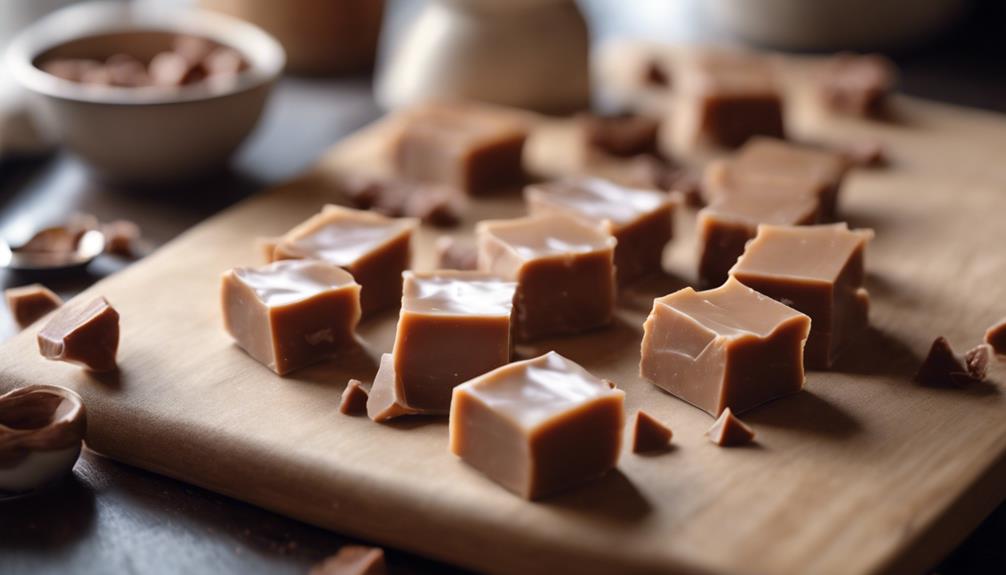
To maintain your fudge at its best, store it in an airtight airtight at room temperature in a cool, dark place. This method guarantees that your fudge retains its moisture and rich, creamy texture. Fudge is best stored at room temperature because its high sugar content acts as a natural preservative, helping to uphold its freshness without refrigeration.
When you store fudge, wrap it tightly in plastic wrap or aluminum foil before placing it in the container. This extra layer of protection will prevent the fudge from absorbing any unwanted moisture or odors. If you have leftover fudge, you can store it the same way, ensuring it remains as delicious as when it was first made.
For longer-term storage, consider using the freezer. Wrap the fudge as mentioned earlier, then place it in an airtight airtightr. Stairtight the freezer and allow it to thaw at room temperature when ready to enjoy it. Freezing fudge helps preserve its quality and texture for an extended period, ensuring you always have a tasty treat.
A cool and dry environment is key to keeping your fudge perfect.
Room Temperature Storage Tips
Store your fudge in a cool, dark environment, away from direct sunlight and temperature fluctuations, for the best freshness. Room temperature storage is ideal because fudge’s high sugar content helps stabilize it, allowing it to last 1 to 2 weeks. The key to maintaining its quality is to protect it from moisture and light.
Use an airtight airtight to keep your fudge fresh. Before placing the fudge inside, layer it with waxed paper to prevent the pieces from sticking together. This method helps maintain the fudge’s texture and taste, as opposed to refrigeration, which can dry it out.
Here are some practical tips for room-temperature storage:
| Step | Description |
|---|---|
| 1. Choose a dry place | Keep your fudge in a dry place to avoid moisture. |
| 2. Use air-tightairtightr | Seal it in an air-tightairtair-tight air. |
| 3. Layer with waxed paper | Place waxed paper between layers of fudge. |
| 4. Avoid direct sunlight | Store away from windows and light sources. |
| 5. Maintain cool temperature | Make sure the storage area is consistently cool. |
Refrigerating Fudge

Despite the benefits of room-temperature storage, you might wonder if refrigerating fudge could extend its shelf life. The high sugar content in fudge acts as a natural preservative, so it doesn’t need to be refrigerated. However, refrigerating fudge can make it dry and alter its texture, impacting its taste in ways you mightn’t enjoy.
It’s best to keep your fudge at room temperature when considering storage tips. Seal it properly and store it in a cool, dark place to maintain quality. Ambient conditions at room temperature are ideal for preserving your fudge’s texture and flavor.
If you live in an area with a hot climate, you might think refrigerating fudge is a good idea. However, even in such conditions, ensure it’s well-sealed to avoid moisture loss and flavor changes.
Freezing Fudge
Freezing fudge is an excellent way to extend its shelf life beyond a few weeks. If you have more fudge than you can consume, freezing is a great option to keep it fresh for up to a year.
Here’s how you can do it effectively:
- Wrap Multiple Layers: Before freezing, wrap the fudge in multiple plastic or aluminum foil layers. This helps maintain moisture and prevents freezer burn.
- Use an Air-TightAirtAir-Tight Airrapped fudge in an air-tightairtair-tight Air-Tighturther to safeguard it from the cold and preserve its texture.
- Label and Store: Don’t forget to label the container with the date you froze it. Store it in the coldest part of your freezer for best results.
- Thaw Properly: When ready to enjoy your frozen fudge, let it thaw on the counter at room temperature. This will guarantee that the texture remains as close to fresh as possible.
Fudge Shelf Life

Understanding how long fudge lasts is crucial for enjoying it at its best. Homemade fudge can last 1 to 2 weeks when leftover fudge is in a room that tempers nature, provided it’s airtight. Ifairtightot professional fudge can remain fresh for at least six months when sealed properly.
The best way to store fudge to extend its shelf life is in the fridge. When stored in the refrigerator, fudge can last 2 to 3 weeks. However, refrigeration can sometimes draw out the moisture from the fudge, so make sure it’s wrapped tightly in plastic wrap or stored in an airtight airtight to airtight texture and taste.
For even longer preservation, consider keeping your fudge in the freezer. Fudge in the freezer can last 2 to 3 months. To avoid freezer burn and maintain quality, wrap the fudge in plastic wrap and place it inside a freezer-safe bag or container. This method guarantees your fudge stays fresh and delicious, ready to enjoy whenever you crave it.
Signs of Spoiled Fudge
Knowing the signs of spoiled fudge guarantees you won’t accidentally consume something that could make you sick. Spoiled fudge can exhibit several noticeable changes, making it easy to identify if it’s no longer safe to eat.
- Texture Changes: Pay attention to how the fudge feels. If it becomes excessively hard or overly gooey, it’s likely spoiled. Fresh fudge should have a consistent, smooth texture.
- Off Odor: Your nose is a great tool for detecting spoilage. If the fudge emits a rancid or off odor, it’s time to throw it out. A fresh batch should smell sweet and inviting.
- Discoloration: Look for any unusual spots or changes in color. Discoloration can indicate that the fudge has gone bad. It should have a uniform color without any strange patches.
Best Containers for Fudge

Selecting the appropriate containers is essential for maintaining the freshness and flavor of your fudge. The best choice is air-tightairtightrs, which prevent moisture absorption and preserve the texture and taste. When you store fudge, using foil or plastic wrap inside the container can provide an extra layer of protection. This helps keep the fudge from sticking together and absorbing unwanted odors.
Here’s a quick comparison of different container options:
| Container Type | Benefits |
|---|---|
| Air-tightAirtight | s freshness, prevents moisture absorption |
| Multiple compartments | Prevents sticking, avoids odor absorption |
| Transparent | Easy content visibility reduces air/light exposure. |
Transparent containers are handy because they let you see what’s inside without opening them, which minimizes exposure to air and light. Stackable containers can be a real space-saver and keep your fudge organized if you’re dealing with multiple batches.
Using the right containers is crucial. Don’t overlook the importance of choosing the best storage solutions to ensure your fudge stays delicious for as long as possible. Whether you use air-tightairtightrs, foil, or plastic wrap, or opt for stackable designs, each choice plays a role in keeping your fudge fresh and flavorful.
Homemade Fudge Storage Tips
To keep your homemade fudge fresh and delicious, store it in the fridge, wrapped tightly in plastic or foil. Proper refrigeration is important for maintaining your fudge’s texture and flavor, ensuring it doesn’t become dry or lose its taste.
Here are some key storage tips to help you extend the shelf life and maintain the quality of your homemade fudge:
- Wrap Tightly: Wrap your fudge tightly in plastic wrap or aluminum foil. This helps to keep out moisture and air, which can degrade the quality.
- Use Airtight Airtightrs: After wrapping, place your fudge in an airtight airtightr. Thairtightn is an extra layer of protection against moisture and helps maintain its texture.
- Label and Date: Always label and date your containers. This ensures you know how long the fudge has been stored and helps you keep track of its shelf life.
- Refrigerate Immediately: Place your wrapped and contained fudge in the fridge as soon as possible to prevent spoilage and extend its shelf life.
Conclusion
You don’t need to refrigerate fudge; its high sugar content naturally preserves it. Storing it at room temperature in an air-tightairtair-tight airtight and maintains its texture.
Refrigeration can make fudge dry and crumbly, so it’s best avoided. For long-term storage, freeze your fudge properly wrapped to prevent freezer burn.
Following these tips, you’ll enjoy delicious, perfectly textured fudge every time.