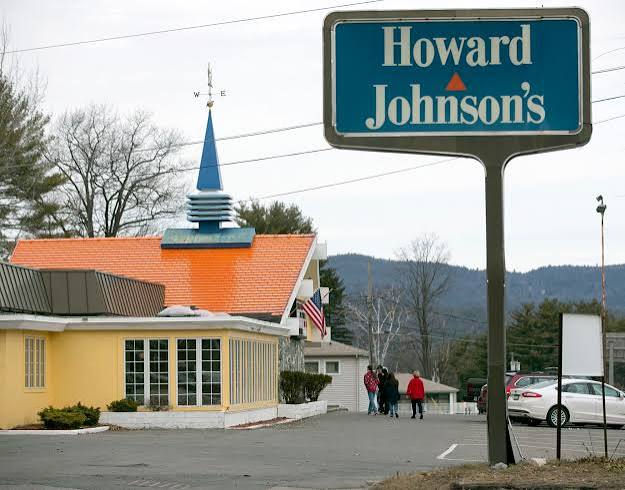

Of the Of the more than 1,000 Howard Johnson’s restaurants at their peak in the early 1970s that once lined American highways, fewer than a handful remain today. that once lined American highways, fewer than a handful remain today.
At their peak, those orange roofs and aquamarine spires were as reliable a landmark as a church steeple, more so, in some stretches of the Pennsylvania Turnpike or the New Jersey shore. If you were an American family piling into a station wagon in 1962, Howard Johnson’s wasn’t a treat. It was a given.
And the food was something else entirely.
Not in the way we use that phrase now, meaning trendy or chef-driven. It was something else because it belonged to a particular moment in American domestic life, when a family dinner out meant tablecloths, a printed menu, and a waitress who called the children “hon.
The clam strips came in a basket lined with wax paper. The chicken potpie arrived still steaming under a thick pastry lid. These weren’t fast-food items dressed up. They were real dishes, made in real kitchens, by cooks who showed up before the breakfast rush and stayed past the dinner one.
Most of those dishes are simply gone now. Not reinvented, not rebranded. Gone.

Table of Contents
The Orange Roof Kitchen. What It Actually Served

Howard Johnson’s built its reputation on consistency, and the menu of the early 1960s reflected that. Clam chowder anchored the lunch offerings, a New England-style preparation, thick and cream-based, served in a wide bowl with oyster crackers on the side.
The clam strips, fried golden and served by the basket, were perhaps the chain’s single most iconic food item and one of the first things regulars mention when they remember the restaurants. Children ordered them by name. Adults ordered them alongside.
The chicken croquettes were another staple entirely. Shaped into neat cylinders, breaded and pan-fried, served with a pale cream gravy, these were midcentury American cooking at its most confident. They required time to make properly and patience to plate well. By the 1980s, labor costs and shifting tastes had quietly removed them from most American restaurant kitchens. Howard Johnson’s was no exception.
And here’s the strange part: the dishes that defined Howard Johnson’s weren’t exotic. They were the things American home cooks already knew: pot roast, macaroni and cheese, baked beans, fish cakes, executed with a reliability that home cooking couldn’t always guarantee on a weeknight. That was the appeal. You knew what you were getting.
The 28 Flavors Nobody Talks About Anymore
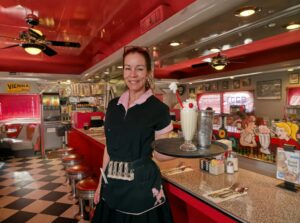
The ice cream is what most people remember first. Howard Johnson’s famously offered 28 flavors at a time when most Americans chose between vanilla, chocolate, and strawberry.
Frozen pudding was among them, a dense, fruit-studded ice cream that tasted faintly of the holidays even in July. Peach ice cream, made with real peach pieces, showed up on summer menus in a way that felt genuinely seasonal. Peppermint stick was a flavor that younger generations would barely recognize today.
The ice cream sandwiches at Howard Johnson’s were hand-built at the counter. Not pre-wrapped, not frozen in a machine. A server scooped the ice cream between two thin wafers while you watched. That tactile, made-to-order quality is something no chain restaurant has managed to replicate in the decades since.
The banana royal sundae, a layered construction of sliced banana, multiple ice cream scoops, hot fudge, and whipped cream served in a long glass dish, was the kind of dessert that required two spoons and a certain willingness to make a mess. It appeared on the children’s menu, though adults ordered it too, and no one said a word.
Dishes the Menu Eventually Lost

The broiled frankfurter, split and served open-faced on a toasted bun with butter, was a Howard Johnson’s lunch item that occupied its own category somewhere between diner food and something more considered. It was nothing like the ballpark frank or the backyard grill dog. The preparation, broiled, buttered, precisely split, gave it a different texture and a different flavor entirely.
The fisherman’s platter combined fried clam strips, fried scallops, and fried fish in a single order that became the default Friday meal for Catholic families up and down the East Coast during Lent.
The scallops were the surprise: sweet, properly dredged, nothing like the rubbery versions that later appeared at lesser chains. By the time fast-food seafood became common in the 1970s and 1980s, the careful preparation that made those scallops worth ordering had largely disappeared from the category.
Baked beans were on the menu too, not as a side item but as a legitimate lunch entrée, served in a small crock with brown bread. This was a New England tradition that Howard Johnson’s carried into the national market at a moment when regional American food still meant something specific. When the chain expanded aggressively and began standardizing, those regional anchors were among the first things to soften.
The macaroni and cheese at Howard Johnson’s was baked, not boiled in a pot and served loose. It came to the table in a small casserole dish, golden on top, with a crust that crackled when you broke through it. The interior was dense and custardy in a way that boxed macaroni never approached. Children ordered it. Their parents ate half of it.
What We Lost When the Orange Roofs Came Down
The turkey dinner deserves its own mention. A full Thanksgiving-style plate, sliced turkey, stuffing, cranberry sauce, mashed potatoes, and gravy, was available year-round at Howard Johnson’s in 1962, not just in November. For families who didn’t always have the time or the kitchen space to produce that meal at home, it was something close to miraculous. A real turkey dinner on a Tuesday in March, for a price a working family could manage.
There was also the chocolate cake. Dense, dark, served in a thick slice with a fork and a small glass of milk if you asked. Nothing about it was remarkable except that it was exactly right, the kind of cake a good home baker would have been proud to pull from the oven. How many restaurant chains today offer chocolate cake worth mentioning? Not many. Possibly none.
What made Howard Johnson’s food worth remembering wasn’t that it was the best American cooking of the era. It was that it was trustworthy, consistent, and made with a seriousness that the chain never quite got credit for. The clam strips were the clam strips every time. The ice cream was cold and real. The chicken croquette, when it was still on the menu, arrived with its gravy warm.
Those orange roofs came down one by one across several decades, and the cooking that happened beneath them came down with them. What replaced it was faster, cheaper, and, if we’re being plain about it, considerably less interesting. The families who ate at Howard Johnson’s in 1962 knew something the industry forgot: that a reliable meal, served with care, in a room that felt like it expected you, was worth driving to find.
Sources
Background on the restaurant chain’s history, peak expansion, and decline
General historical context on midcentury American restaurant culture
This article was created with AI assistance and reviewed for clarity and accuracy.