

Of all the foods on a Juneteenth table, the red ones are the ones that ask to be explained.
Red velvet cake. Strawberry soda. Hibiscus punch. Watermelon. They show up every June 19th across tables in Texas, in Georgia, in church fellowship halls and backyard celebrations from Houston to Harlem. Ask why, and most people will pause. They know it’s tradition. They know it matters. The full story, though, reaches back far further than most people realize, all the way to West Africa, and to a June morning in 1865 when a group of Union soldiers rode into Galveston, Texas, and said the words that approximately 250,000 enslaved people, a figure cited by Juneteenth historians and advocates, had been waiting more than two years to hear.
Table of Contents
What Happened in Galveston
The Emancipation Proclamation had been signed on January 1, 1863. But Texas was deep Confederate territory, and word didn’t reach Galveston until June 19, 1865, when General Gordon Granger arrived with Union troops and read General Order No. 3, the announcement that enslaved people in Texas were free. The war had been over for months. For the quarter-million people who heard that news, or heard of it, freedom arrived late. The celebration that followed was immediate and fierce, and it never really stopped. Communities in Texas began marking June 19th every year after that. The holiday spread slowly northward as Black families migrated. It became a federal holiday in 2021.
The food at those early celebrations wasn’t incidental. It was chosen. And the color red kept appearing.
A Color That Crossed the Atlantic
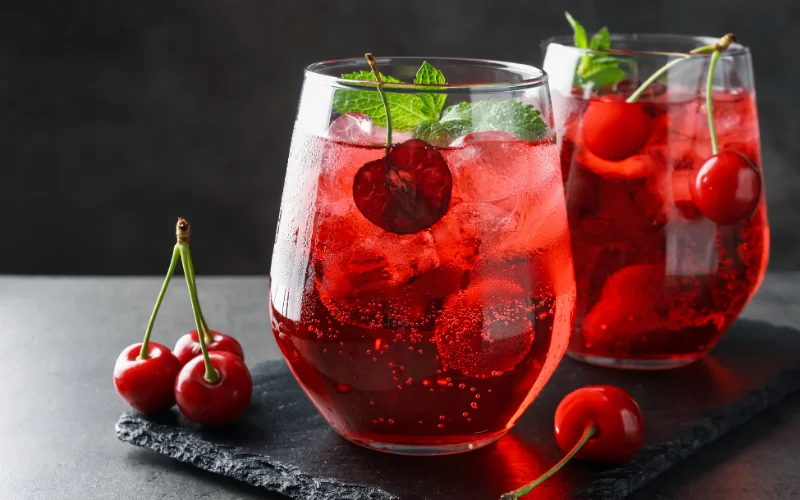

The preference for red foods and drinks at Juneteenth didn’t begin in Texas. Food historians have traced it to West African cultural traditions where red ingredients, hibiscus flowers, red palm oil, kola nuts, carried ceremonial weight. Red was a color of life, of spirit, of significance. Enslaved people brought those associations with them across the Middle Passage, and the cultural memory of red as meaningful, as celebratory, survived generations of forced displacement.
Hibiscus, known across parts of West Africa as bissap (particularly in Senegal and francophone regions) and as sorrel in Caribbean traditions, was brewed into tart, brilliant-red drinks for celebrations. In the American South, that tradition evolved. Hibiscus punch became red punch. Red fruit drinks became part of the table. And when commercial sodas arrived in the late 19th and early 20th centuries, red soda, sweet, bright, cold, fit naturally into a tradition that was already there.
Dr. Ronald Myers, a physician and Juneteenth advocate, associated with the National Juneteenth Observance Foundation, has said it plainly: he has described watermelon and red soda water as among “the oldest traditional foods on Juneteenth.” That’s not a modern food-trend observation. That’s a living line of continuity from the celebrations in Galveston in 1865 forward.
Big Red, and Why Texas Has a Claim on the Whole Thing
Here’s the part that makes the food tradition feel almost poetic. Big Red Soda, long associated with Texas, was created in Waco, Texas. The same state where Juneteenth was born produced one of its most enduring food symbols, a cream soda blended with a flavor often described as bubble gum and vanilla, tinted that specific shade of red, sweet enough to make your teeth ache. In Texas, Big Red at a Juneteenth celebration isn’t a soft drink choice. It’s a ritual.
The brand’s cultural resonance in Black Texas communities runs decades deep. You could say it’s a coincidence, a soda from Waco becoming the unofficial drink of a holiday that started in Galveston. But it doesn’t feel like one. It feels like a place working out its own history through the things it loves to eat and drink.
Red Velvet Cake’s Longer Journey
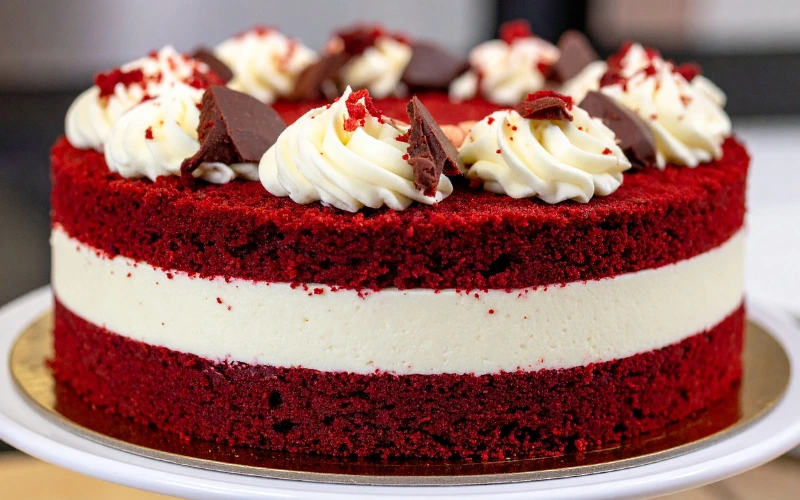
Red velvet cake is the more complicated piece of this story. The cake itself predates Juneteenth as a celebration food. Versions of it appear in American recipe records going back to at least the early 20th century, and its signature color originally came from a chemical reaction between natural cocoa and acidic buttermilk, which produced a reddish tint without any added dye. Later, especially during and after World War II rationing, bakers used beet juice to deepen the color. The red food dye version came later still.
How did it arrive at the Juneteenth table? The same way most beloved recipes travel, through family, through church, through the slow accumulation of what feels right for a celebration. Red velvet cake is festive. It is unmistakably red. In communities where red already meant something for June 19th, a spectacular red cake fit. It wasn’t assigned a meaning. It earned one.
That distinction matters. The red food tradition at Juneteenth isn’t a marketing invention or a recent revival. It is a genuine thread, sometimes frayed, sometimes nearly invisible, running from hibiscus ceremonies in West Africa through Galveston in 1865 through church fellowship halls in the 20th century to whatever table you’ll set this June 19th.
The Recipes Worth Making This Year
Pinch of Taste Recipes and other food writers covering Juneteenth 2026 have gathered the dishes that show up most consistently at authentic celebrations: hibiscus punch, strawberry soda, red velvet cake, peach cobbler, and watermelon in various forms. A few notes on what makes each of them matter beyond the flavor.
Hibiscus punch, sometimes called agua de Jamaica in Mexican communities, sorrel drink in Caribbean ones, is made by steeping dried hibiscus flowers in hot water with sugar and often ginger or cloves. It is tart the way cranberry juice is tart, brilliant red without any dye, and cold hibiscus punch on a June afternoon in Texas is one of those drinks that feels like it was engineered for a specific moment. It was, in a way.
Peach cobbler is less about the red tradition and more about the season. June peaches in the South are at their peak around the 19th, and cobbler is a dish that stretches to feed whoever shows up. That’s always mattered at Juneteenth, which has historically been a community gathering, not just a family one. The more the better. The cobbler knows this.
Red velvet cake, made properly with natural cocoa and buttermilk rather than a full bottle of red dye, has a flavor that most grocery-store versions never quite deliver, slightly more complex, a little less sweet, with that cream cheese frosting cutting through the richness in exactly the right way. It’s worth making from scratch. It is absolutely worth eating at a table where you understand what the color means.
How strange it is, sometimes, to realize that something as simple as the color of a cake can hold that much, that a tradition carried across an ocean in the memories of enslaved people could survive centuries of erasure and arrive, still intact, still red, still worth celebrating.
Juneteenth 2026 falls on Friday, June 19th. The weekend is long. The tradition is longer.
Sources
- Smithsonian Magazine. A Brief History of Red Drink, source for the West African origins of the red-drink tradition (hibiscus, kola nut, bissap)
- PBS. The Meaning and History of Juneteenth Foods, source for the red-food symbolism (Yoruba and Kongo roots) and red velvet’s place at the table
- Atlas Obscura. The Story Behind Red-Hued Juneteenth Food and Drink, source for the West African roots of the Juneteenth red-food tradition
- Waco History (Baylor University). Big Red, source for Big Red’s 1937 Waco origin and its connection to Juneteenth
This article was created with AI assistance and reviewed for clarity and accuracy.