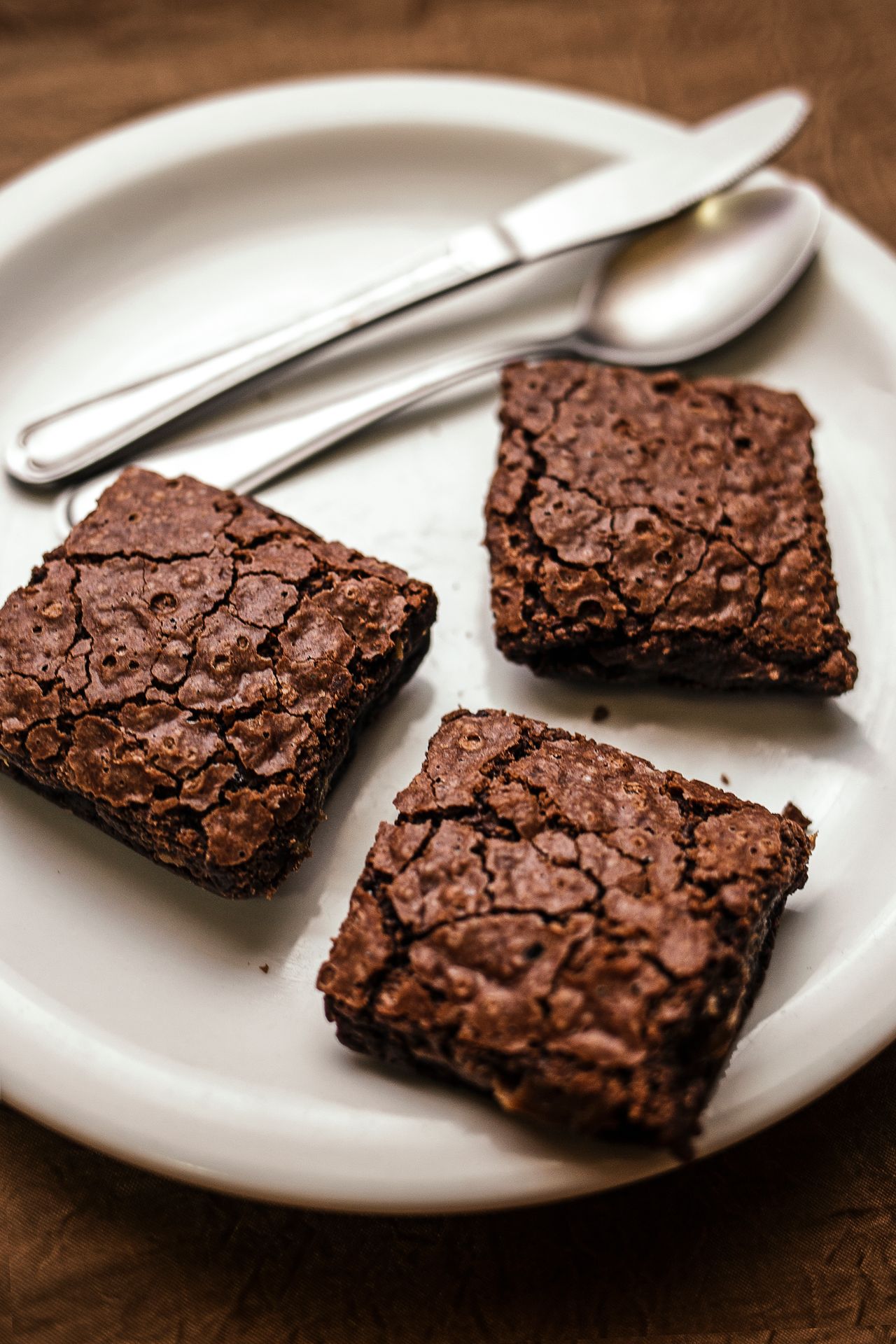

The first brownie out of the pan is the honest one. Pull it too soon, and it’s molten in the middle, which sounds appealing until it falls apart on the spatula. Pull it too late,e and you’ve got something closer to chocolate cake:ke dry, crumbly at the edges, and missing that particular resistance that makes a good brownie worth eating. Most home bakers land closer to the second problem than the first, and most of them blame the recipe.
The recipe is almost never the problem.
What’s going wrong is almost always one of a small cluster of technique errors — things that are easy to fix once you know what to look for. Brownies are actually less forgiving than most baked goods when it comes to a few specific variables: oven temperature, fat ratio, mixing time, and the moment you decide they’re done. Get those four things right, and the rest takes care of itself.
Table of Contents
The Fat Is Doing More Work Than You Think


Brownies sit in a strange category between cake and candy, and fat is what keeps them on the right side of that line. Butter, or in some older recipes, oil, is carrying the fudgy texture you’re after. When a recipe calls for melted butter specifically, that’s not just for convenience. Melted butter coats the flour proteins differently than creamed butter does, and the result is a denser, chewier crumb with less air built in. That’s exactly what you want in a brownie.
Where things go wrong is in the ratio. Many home bakers substitute oil for butter (or vice versa) without adjusting amounts, or they reduce the fat slightly thinking it will make a “lighter” result. It will. It will also make a drier one. Fat in a brownie isn’t just about flavor; it’s the primary moisture carrier. Cut it, and you cut the fudge.
The same goes for eggs. Brownies with an extra yolk, or with one egg swapped entirely for a yolk, tend to be richer and more dense. The yolk adds fat and emulsifiers that hold moisture in. If your brownies are consistently dry and you haven’t changed anything else, try pulling one egg white and replacing it with an extra yolk. It’s a small change. The results aren’t small.
The Oven Is Probably Hotter Than It Says

Here’s the thing most baking guides skip over: home ovens lie. Not a little. A 2020 review of common residential ranges found that the average home oven runs 25 to 50 degrees hotter than its dial claims. You set it to 325°F. You’re probably baking at 360°F. For cookies, that’s a crispier edge. For brownies, that’s the difference between fudgy and dust.
Brownies bake from the outside in. The edges set first, then the middle catches up. If your oven is running hot, the edges are fully baked, possibly overbaked, before the center reaches the right temperature. By the time the center looks done, the edges have gone past it. What you pull out looks acceptable on top but slices dry.
An oven thermometer costs very little and solves this permanently. If you find your oven runs 25 degrees hot, you adjust down by 25 degrees, and your brownies improve immediately. It sounds almost too simple. It is almost too simple. But it’s the single most common reason experienced bakers get inconsistent results, not the recipe, not the pan, the oven.
Speaking of pans: the material matters more than most people realize. Dark metal pans absorb heat faster and can cause the bottom and edges of your brownies to overbake before the middle is done. Glass pans heat more slowly and more evenly. If you’ve been using a dark nonstick pan and getting dry edges, try switching to a light-colored metal pan or glass, and you may not need to change anything else.
You’re Mixing It Too Long
Overmixing is the quiet villain of home baking, and it’s especially damaging to brownies. Once flour hits the wet ingredients, gluten starts to develop. A little gluten gives brownies their slight chew. A lot of gluten makes them tough and dry. The difference between the two is about thirty seconds of mixing.
The right technique is to fold the flour in until the batter just comes together, no dry streaks, but no more than that. If you’re using a stand mixer, this is even easier to overdo than by hand, because the machine works faster than you expect. Stir by hand for the flour addition, even if you used the mixer for everything else. It takes an extra minute, and it’s worth it.
The Toothpick Test Is Lying to You

The toothpick test is reliable for cake. For brownies, it’s almost always wrong, or at least, it’s measuring the wrong thing. A toothpick that comes out clean from a brownie means the brownies are overbaked. What you’re looking for instead is a toothpick that comes out with a few moist crumbs clinging to it. Not batter. Crumbs.
The center of a properly fudgy brownie will still look slightly underdone when you pull it from the oven. That’s correct. The brownies will continue cooking from residual heat for several minutes after you take them out, and they’ll firm up further as they cool completely. If you wait until they look done in the oven, they’ll be overbaked by the time you eat them.
This is the hardest adjustment to make, because it requires trusting the process over what your eyes are telling you. Pull the pan when the edges are set, and the center jiggles just slightly. Set a timer for the low end of the recipe’s suggested bake time and check then, not five minutes later when you get around to it. Brownies don’t wait.
Cooling Too Fast Makes Everything Worse

One last thing, and it sounds almost too minor to matter. Don’t cut your brownies while they’re warm. The fudgy texture that develops as brownies cool is partly about fat solidifying and the crumb setting. Cut them hot,t and you’re cutting into a structure that hasn’t finished forming; they’ll seem gummy or crumbly depending on the recipe, and the texture you were hoping for won’t be there yet.
An hour at room temperature is the minimum. Two hours is better. If you refrigerate them for thirty minutes first, the edges will be cleaner, and the center will be noticeably more dense and satisfying. It’s hard to wait. But the brownie you get at the end of two hours is a different brownie than the one you’d have pulled apart at twenty minutes, and the difference is obvious in the first bite.
And here’s the strange part. Something as simple as a pan of brownies has this many moving pieces, most of them invisible until you know where to look. But that’s baking. The recipe is the map. The oven, the pan, the mixing, the patience, those are the actual journey.
The brownies you’ve been making aren’t broken. They just need a few quiet adjustments, and then they’ll be exactly what you were hoping for all along.
This article was created with AI assistance and reviewed for clarity and accuracy.